


TECHNICAL GUIDES / COLD CLIMATE
Overview: How cold climates break conventional microgrids — and the hybrid architecture, sizing method and readiness checklist that keep remote sites powered below −20°C. Rated to −40°C on key PORTA models.
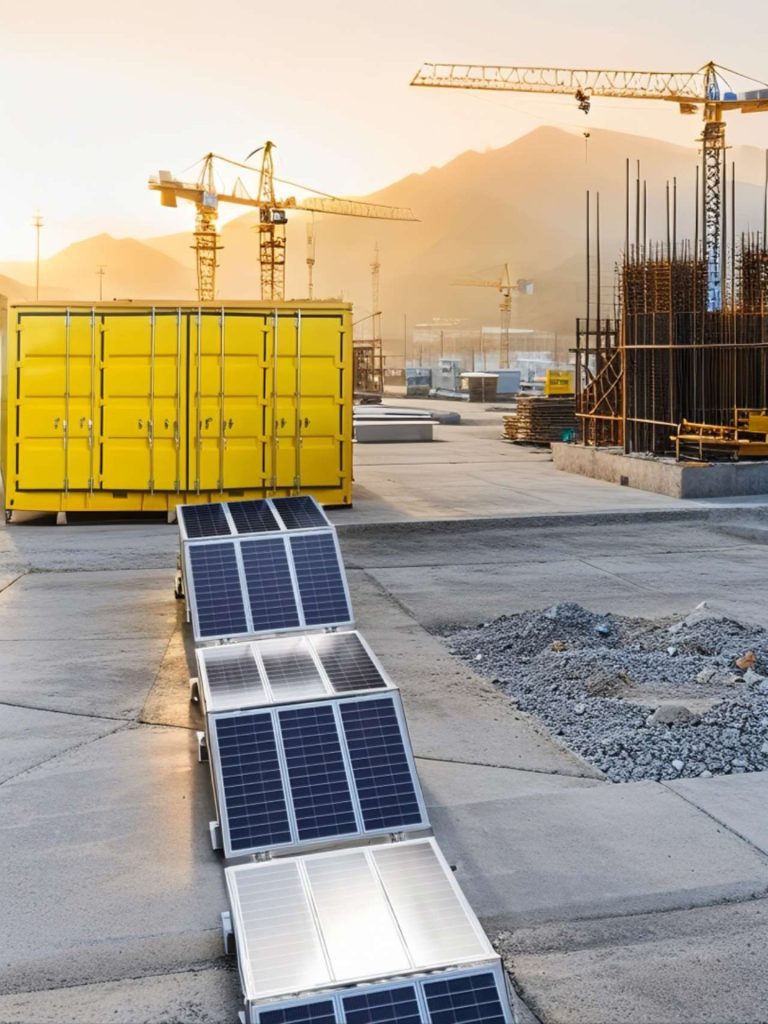
>A remote microgrid designed for a temperate climate silently loses capacity the moment the thermometer drops. Below −10°C, the same lithium battery that delivered 100% of its nameplate energy in the lab may only return 70–80% of rated capacity; below −20°C that figure can fall to 60% or less, and the cells refuse to accept a fast charge at all until they are warmed. Diesel generators — the usual backup — also lose starting reliability, thicken their oil and burn a larger share of every litre just reaching operating temperature. Inverters derate, seals stiffen, and condensation forms inside enclosures when a brief spell of sun warms them.
>For mines, telecom sites, research stations and remote camps that must stay powered through a northern winter or a high-altitude cold season, “just add solar” is the wrong instinct. This guide explains how cold actually degrades each component, the architecture that holds up below −20°C, a sizing method, a readiness checklist, and four real deployments — Nordic, Antarctic, high-altitude Saudi and Central Asian — that already prove the template. PORTA’s foldable solar container and mobile BESS are rated for ambient temperatures down to −40°C on several models, which is what makes the whole approach field-credible rather than theoretical.
| Component | What cold does | Design consequence |
|---|---|---|
| Li-ion / LFP battery | Electrolyte thickens, internal resistance climbs, usable capacity and charge acceptance fall | Wide-temperature cells, self-heating, or derated C-rate |
| Diesel genset | Oil thickens, cold-start fails, more fuel burned warming up | Block heater, winter-grade fuel, genset as extender not primary |
| Inverter / PCS | Semiconductors derate, fans stall, condensation inside | IP-rated heated enclosures, low-temperature rating |
| PV array | Output is stable, but snow cover and low sun angle cut yield | Steeper tilt, bifacial gain, snow-shedding frame |
| Cabling / seals | Embrittlement, differential contraction | Cold-flexible insulation, strain relief |
>The single biggest surprise for operators is the battery. A standard lithium cell that gives 100% capacity at +25°C typically retains only about 75% at −20°C and roughly 55% at −30°C, while its ability to accept charge collapses unless the cell is warmed first. Self-heating battery packs — or siting the battery inside a heated, insulated enclosure — recover most of that lost capacity and let the system fast-charge even at −30°C.
>The chart below shows how usable battery capacity falls with temperature, and how self-heating holds the line.
>Below −20°C, the right design is a layered hybrid: let solar and storage carry the base load, keep a diesel genset as a cold-weather extender, and wrap the whole thing in an energy-management system (EMS) that pre-heats batteries before charging and trims diesel to a few critical hours.
>Winter sun is both weaker and lower in the sky. Two responses matter. First, tilt the array steeper (often 45–60° at high latitude) to catch the low sun and shed snow. Second, choose bifacial or high-efficiency modules so every hour of weak light still produces. PORTA’s foldable solar container deploys 40 alternating wave / corrugated / accordion faces, each holding 3 PV modules tilted 20–25° and angled to shed snow — and several PFC models are rated for ambient down to −40°C, so the structure itself survives the season.
>The battery is the heart of a winter-ready microgrid. Specifying wide-temperature LFP cells plus an integrated self-heating function (or a heated enclosure) keeps round-trip efficiency and charge acceptance high even at −30°C. A practical rule: size the battery for the *cold* capacity, not the nameplate, so the site still meets autonomy on the worst night. PORTA’s mobile BESS is built around LiFePO4 cells with wide-temperature operation and optional self-heating, scalable from 100 kWh into the MWh range.
>Rather than running a genset 24/7, the EMS starts it only for extreme deficits, cold-soaks, or to pre-heat and bulk-charge the battery. This cuts winter fuel use by 60–80% versus a diesel-only site while guaranteeing the load never drops. For a high-altitude Saudi camp near Abha or a Central Asian winter site, that diesel extender is the insurance policy that makes 100% uptime believable.
>The diagram below shows the cold-climate hybrid architecture with PV, wide-temperature BESS, diesel extender and EMS dispatch.
>Sizing for cold is the same five steps as any microgrid, with one extra rule — design every energy term at the worst-case temperature.
>Before committing capital, run your numbers through the free solar-diesel-storage microgrid Configurator — it returns a preliminary design in about five minutes.
>Treat the following as the go/no-go list before a cold-season deployment:
>Four deployments show the pattern working from the Arctic Circle to the roof of Asia.
| Site | Min temp | Solution | Result |
|---|---|---|---|
| Nordic forest compute node | −35°C | Off-grid solar + LFP, diesel only ~7×/yr | Year-round uptime, near-zero fuel |
| Antarctic research station | −50°C | Hybrid microgrid, pre-heated storage | >50% fuel saved vs diesel-only |
| High-altitude Saudi (Abha) | −5°C nights | Foldable solar + BESS + diesel extender | Reliable camp power, 60–80% fuel cut |
| Central Asia winter camp | −30°C | Containerized PV+BESS+DG | 3-hour deploy, winter-robust |
>The comparison below shows how the same architecture is tuned to very different cold extremes.
>Lipki ski resort in Europe paired 1.1 MWp of PV with 5 MWh of LFP storage and cut operating cost by about €250,000 per year with a 4.1-year payback — a reminder that cold sites with good winter sun can still pencil out. Mongolia’s Solar Ger programme has shipped well over 100,000 portable solar home systems to herders in −30°C winters, proving the hardware survives the season at scale.
>The same PORTA family that serves deserts also serves the cold — the difference is specification, not platform.
>The product photo below shows the PORTA foldable solar container built for wide-temperature operation.
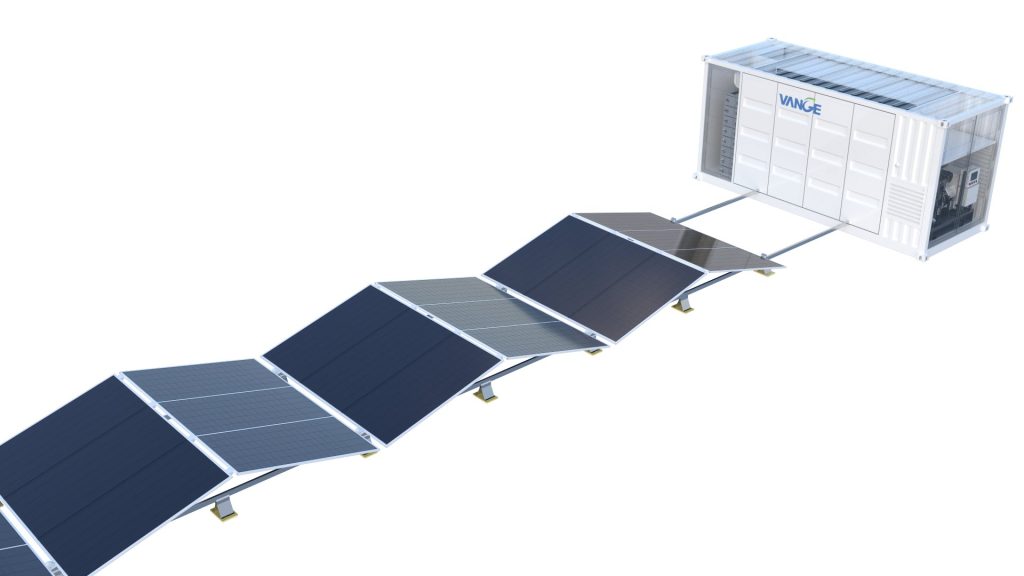
>The image below shows a PORTA foldable photovoltaic container with its array stowed for transport to a freezing site.
>For mission-critical winter operations, the Hybrid ALL-IN-ONE and foldable solar container are the two units most often specified; the ADF financing programme can also apply to cold-climate Saudi sites.
>Cold does not break a microgrid if you design for it. Size the battery at cold capacity, give it self-heating, tilt the PV for winter sun, and keep a diesel extender as insurance — then let the EMS orchestrate. The four deployments above show the same architecture holding from −5°C Saudi highlands to −50°C Antarctica.
>PORTA’s foldable solar container, mobile BESS and hybrid ALL-IN-ONE provide a deployable, modular path that is rated down to −40°C on key models. Start with a winter load audit, apply the 5-step method, and use the free solar-diesel-storage microgrid Configurator to size your winter-ready microgrid in about five minutes.
>Yes, with the right specification. Standard lithium cells lose 25–40% of usable capacity below −20°C and resist charging unless warmed, but wide-temperature cells with self-heating or a heated enclosure recover most of that capacity and charge normally even at −30°C.
>Use winter-grade fuel, a block heater, fuel-water separation and an EMS that pre-heats the genset and starts it only for critical deficits — not as a 24/7 primary. This both improves reliability and cuts fuel use 60–80%.
>At high latitude, steeper tilt (often 45–60°) captures the low winter sun and sheds snow. PORTA’s foldable container uses faces tilted 20–25° that also shed snow; for fixed winter sites, increasing tilt for the season is the standard optimization.
>Well-designed cold-climate hybrids still cut diesel 60–80% versus a generator-only site, because solar and storage carry the base load and the genset runs only for extreme deficits or battery pre-heat.
>A PORTA foldable solar container deploys in about 3 hours on prepared ground; a full hybrid with BESS and diesel extender is operational within days, with minimal civil works even on frozen or remote sites.
Related Reading
Get a customized technical proposal and a capacity-ready quotation. Response within 24 hours.
Email: Jayden@solarstoragediesel.com
WhatsApp: +966 539412006
Riyadh, Saudi Arabia | Nanjing, China
Get a customized technical proposal and pricing for our mobile energy solutions.
Tell us about your requirements and we’ll build a solution.
Ask me anything about solar-storage-diesel hybrid microgrids!