


CASE STUDIES / ISLAND & COASTAL
Overview: Island microgrid solar power case studies: from 5 kWp lighthouse DC systems to whole-island wind-solar-pumped-hydrogen grids. Salt-spray, typhoon and Red Sea replication for Saudi coastal sites.
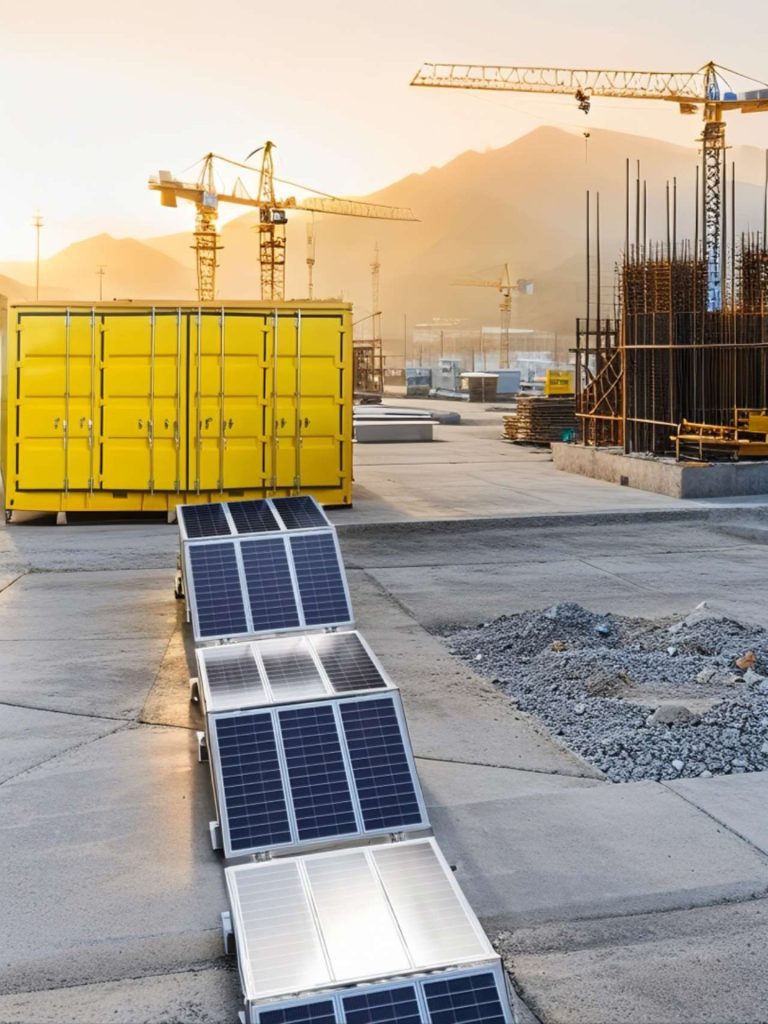
>A island microgrid solar power system is no longer a niche curiosity. In the latest wave of global microgrid deployments, island and coastal projects now make up roughly 7% of new builds, driven by two forces that apply equally to Pacific atolls, Caribbean cays and the Red Sea islands of Saudi Arabia: the exploding logistics cost of delivered diesel, and decarbonization mandates that make a standalone generator politically and economically harder to justify.
>The engineering challenge scales dramatically across that 7%. A remote lighthouse needs a continuous 3–10 kW. A whole island grid can demand 500 kW to several MW. Those two extremes require fundamentally different architectures, and lumping them under one label (“just add solar”) is how island projects go wrong.
>This article lays out a practical technology ladder for island microgrid solar power — from a 5 kWp DC-only lighthouse system to a 500 kWp AC-coupled hybrid, up to a multi-source whole-island grid — and shows where Saudi Red Sea and Arabian Gulf coastal sites fit. It draws on five global case studies that already prove 70%+ diesel savings, and on PORTA’s deployable foldable solar container, mobile BESS and hybrid ALL-IN-ONE units as the hardware path between tiers.
>For the Saudi coastal proof points, see 5 global island off-grid microgrid cases that prove 70%+ diesel savings for Saudi coastal projects and how solar-storage-diesel hybrids are replacing diesel generators on islands worldwide.
>The smallest island loads are the purest case for DC. A lighthouse, navigation aid or small sensor station typically draws 1–3 kW continuously, consumes 8–15 kWh/day, and must ride through 3–5 days of storm when a fuel boat cannot reach it.
>At that scale, a DC-only microgrid beats AC conversion on efficiency: a 5 kWp PV array feeds a 72 kWh LiFePO4 DC bus through MPPT charge controllers, with no inverter in the main path. Round-trip efficiency lands at 92–95% versus the 85–88% you lose pushing DC→AC→DC for a small load. Autonomy is the design driver, not cost per watt.
| Metric | Diesel baseline | 5 kWp + 72 kWh DC solar | Difference |
|---|---|---|---|
| Fuel delivery | Monthly fuel run by boat | One technician visit/year | ~11 trips eliminated |
| Autonomy | <1 day (tank) | 3–5 days storm-rated | Resilient to weather |
| Efficiency | 30–40% gen. efficiency | 92–95% DC round-trip | Less energy wasted |
| Maintenance | Monthly checks + oil | Annual remote monitor | ~90% fewer site visits |
| Noise / emissions | Continuous | Silent at night | Wildlife + crew friendly |
>Salt-spray survival is non-negotiable even at this scale: IP66 enclosures, marine-grade anodized frames, 316 stainless fasteners and conformal-coated PCBs. PORTA’s mobile BESS in a DC configuration can serve as the battery core, and the foldable solar container can be scaled down or paired with fixed PV for very small loads. See the global island cases with 70%+ diesel savings for a real lighthouse conversion.
>Step up to a small island community, resort or telecom site — 50–500 kW peak, 200–2,000 kWh/day, 20–100 residents or a cluster of loads — and the architecture flips to AC-coupled hybrid. The diagram below shows the building blocks.
>A typical 200 kWp island microgrid pairs 200 kWp of PV with 400 kWh of battery and a 150 kW diesel genset as backup, tied together by a smart EMS that optimizes generator runtime. When the solar fraction reaches 50–70%, diesel savings of 60–80% are normal, and payback lands at 4–7 years against a $0.30–0.50/kWh diesel-equivalent cost.
>The diagram below shows the AC-coupled island hybrid microgrid with a foldable solar container, mobile BESS, diesel genset and EMS dispatch.
>Typhoon and cyclone hardening matters here: PV tilted 20–25° sheds wind uplift better than flat or steep arrays; containerized BESS is anchored to concrete pads; cable trays are sealed against salt ingress. PORTA’s foldable solar container (78 kWp) plus mobile BESS plus hybrid ALL-IN-ONE can form a modular 50–500 kWp island microgrid with about 3-hour deployment. The containerized solar turnkey solution for remote sites explains the deployment model in detail.
>Above ~500 kW peak, solar and batteries alone stop being enough. A whole-island grid — 500 kW to 5 MW peak, 2–20 MWh/day — needs multi-source dispatch and grid-forming inverters. The schematic below shows the four supply classes and how they hand off.
>A 100% renewable island grid might combine 1 MW of wind (capacity factor 35–45%), 500 kWp of solar (1,600–1,900 kWh/kWp/year), 2 MWh of pumped hydro for 8–24 hour long-duration storage, and hydrogen for seasonal balancing. The grid-forming BESS provides inertia and the voltage/frequency reference; the EMS coordinates source prioritization and load shedding.
| Source | Capacity | Duration | $/kW installed | Maturity |
|---|---|---|---|---|
| Wind | 0.5–2 MW | Continuous | $1,200–2,500 | Proven |
| Solar PV | 0.5–1 MWp | Daytime | $800–1,500 | Proven |
| Pumped hydro | 1–5 MWh | 8–24 h | $1,500–3,000 | Proven (site-limited) |
| Hydrogen | Seasonal | Days–weeks | $3,000–6,000 | Early / pilot |
>The cost reality: $2,000–4,000/kW installed for a whole-island hybrid, against a diesel avoided cost of $0.40–0.80/kWh that makes it viable on remote islands. PORTA’s mobile BESS and hybrid ALL-IN-ONE serve as the grid-forming anchor and emergency backup for critical island infrastructure — clinic, telecom, water pumping — even on islands that ultimately build a larger multi-source grid. For the worldwide replacement story, see solar-storage-diesel hybrids replacing diesel generators on islands.
>Coastal and island gear lives or dies by its corrosion rating. ISO 9223 puts most coastal and offshore sites in categories C4 (high) or C5-M (very high, marine). That dictates the bill of materials.
| Component | C4 (coastal) | C5-M (offshore / splash zone) |
|---|---|---|
| Structure | Hot-dip galvanized steel | 316 stainless or duplex coating |
| Fasteners | A4-70 stainless | 316 stainless + sealed |
| PV frame | Anodized aluminum | Marine anodize + edge seal |
| Enclosures | IP65 | IP66 + conformal coat |
| Cabling | UV-stable, tray-sealed | Armored + salt-ingress barriers |
>Three more coastal realities: PV tilted 20–25° reduces wind uplift versus flat arrays and is rated for 150–200 km/h gusts when containerized; at 45–50°C ambient, PV output drops 8–12% and BESS needs active cooling or high-temperature cells to hold its C-rate; and Red Sea dust means anti-soiling coatings plus cleaning every 2–4 weeks, with foldable containers reducing exposed surface when stowed.
>PORTA’s foldable solar container uses 40 alternating wave / corrugated / accordion faces, each holding 3 PV modules and tilted 20–25° in opposite directions on a single-side deployment track, so both the sun-facing and shaded-side faces generate. The containerized solar turnkey guide covers anchoring and siting for remote coastal sites.
>Saudi Red Sea islands, the Farasan archipelago and coastal industrial camps face the same constraints as Pacific and Caribbean islands: salt spray, high ambient heat, and fuel delivered by boat at $0.35–0.60/L landed. That landed price is what makes solar-storage payback work.
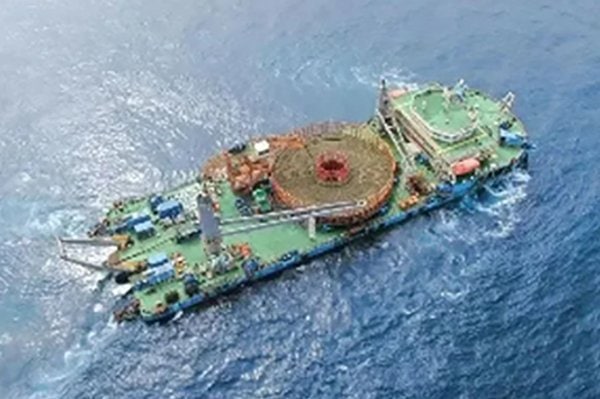
>The coastal scene below shows the kind of marine deployment environment Saudi Red Sea islands present.
>For a 200–400 kWp solar plus 500–1,000 kWh BESS configuration, diesel replacement of 70–85% is achievable for resort and island loads. Remote monitoring cuts site visits from monthly to quarterly, and a foldable solar container deploys in about 3 hours with minimal civil works. Saudi Vision 2030 and the Red Sea Development Company targets actively support renewable microgrids; off-grid sites are not subject to net-metering rules, so every kWh of self-generation is a direct fuel saving.
>The five global island cases with 70%+ diesel savings are directly transferable to Saudi coastal sites once salt-spray and high-ambient adjustments are applied. Before you size anything, run your numbers through the free solar-diesel-storage microgrid Configurator — it returns a preliminary design in about five minutes.
>Sizing follows the same logic whether the load is a lighthouse or a small island, just scaled.
>The free Configurator turns these five steps into a single form, so you can sanity-check a vendor quote or a DIY design before committing capital.
>Five representative projects show how the ladder plays out in practice. Load, PV, BESS, savings, autonomy and corrosion class tell the whole story.
| Project | Location | Load | PV kWp | BESS kWh | Diesel saving | Autonomy | Class | Deploy |
|---|---|---|---|---|---|---|---|---|
| A — Lighthouse | Remote islet | 5 kW | 5 | 72 | 100% replaced | 5 days | C5-M | Fixed |
| B — Small island | Island community | 200 kW | 200 | 400 | 70% | 2 days | C4 | 6-week |
| C — Whole island | Island grid | 1 MW+ | 500 + 1 MW wind | 2 MWh + pumped | 90% renew. | Grid | C4 | 18-month |
| D — Telecom island | Island tower | 100 kW | 100 | 200 | 85% | 3 days | C5-M | 3-hour container |
| E — Coastal camp | Mining/coastal | 500 kW | 500 | 1,000 | 75% | 1 day | C4 | 2-week foldable |
>Project A is the pure DC lighthouse case from Tier 1. Project D shows the speed advantage of containerized deployment — a telecom island brought online in 3 hours versus weeks of civil works. Project E uses foldable containers to stand up a 500 kWp coastal camp in two weeks. For the full Saudi-relevant breakdown, see 5 global island off-grid cases proving 70%+ diesel savings.
>The hardware path between tiers is the same family of PORTA units, scaled by block.
>The product photo below shows the PORTA foldable solar container and hybrid ALL-IN-ONE units deployed for island and coastal microgrids.
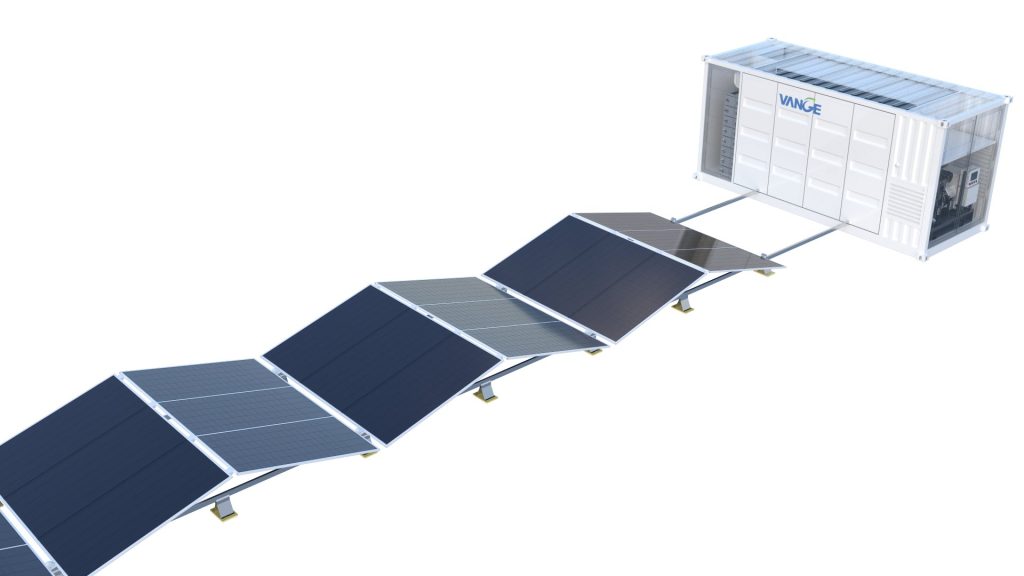
>Use cases span lighthouse backup, telecom towers, island resorts, coastal mining camps and Red Sea development sites. The containerized solar turnkey solution details the deployment model.
>Match the architecture to the load: DC-only below 10 kW, AC-coupled hybrid for 50–500 kW, multi-source for above 500 kW. Salt-spray and high-ambient adaptation are non-negotiable for Red Sea and Arabian Gulf islands — C4/C5-M materials and 20–25° tilt are the baseline, not the upgrade.
>PORTA’s foldable solar container, mobile BESS and hybrid ALL-IN-ONE provide a deployable, modular path from a single lighthouse to a whole-island grid. Start with a load audit, apply the 5-step framework, and use the free solar-diesel-storage microgrid Configurator to size your island microgrid in about five minutes.
>It combines PV, battery storage and often diesel backup to supply reliable electricity to an isolated island or coastal site with no mainland grid connection. The architecture ranges from a 5 kWp DC lighthouse system to a multi-source whole-island grid.
>Well-designed island microgrids typically replace 60–85% of diesel consumption, depending on load profile, solar resource and storage sizing. Multiple global island cases already demonstrate 70%+ savings.
>Yes, with marine-grade materials (316 stainless, C4/C5-M coatings) and wind-rated anchoring. PORTA foldable solar containers are designed for coastal deployment with 20–25° tilt to reduce uplift and IP66 enclosures for salt protection.
>Sizing depends on daily kWh, peak kW and autonomy days. A 5 kWp / 72 kWh DC system suits a lighthouse, while 200 kWp / 400 kWh hybrid suits a small island community. The 5-step framework and free Configurator handle the math.
>A PORTA foldable solar container deploys in about 3 hours on prepared ground; a full hybrid microgrid with BESS and diesel can be operational within days, not the months a fixed civil-works build requires.
Get a customized technical proposal and a capacity-ready quotation. Response within 24 hours.
Email: Jayden@solarstoragediesel.com
WhatsApp: +966 539412006
Riyadh, Saudi Arabia | Nanjing, China
Get a customized technical proposal and pricing for our mobile energy solutions.
Tell us about your requirements and we’ll build a solution.
Ask me anything about solar-storage-diesel hybrid microgrids!