


TECHNICAL GUIDES / 2027 OUTLOOK
Overview: Explore 8 predictions for 2027 off-grid power—from hybrid solar-storage-diesel systems to AI-driven energy management. Actionable insights for mining, construction, and remote operators.

>Our 2027 off-grid power predictions point to one clear theme: hybrid is no longer the exception, it is becoming the default. Remote operators in mining, construction, agriculture, and telecom are moving away from diesel-only plants toward solar-storage-diesel systems that cut fuel burn, stabilize costs, and meet tightening emissions rules. This outlook covers eight trends we expect to shape off-grid power in 2027 — and what each one means for your site.
>The first of our 2027 off-grid power predictions is structural: new remote projects are increasingly specified as hybrid from day one rather than retrofitted later. The driver is economics. Diesel fuel is volatile, logistically fragile, and increasingly taxed through carbon levies, while solar modules and batteries keep getting cheaper. Operators now treat the diesel generator as a strategic backup, not the primary source.
>This shift is visible in procurement. EPCs and remote-site managers routinely ask for “hybrid-ready” designs that reserve space and switchgear for solar and storage. A hybrid system pairs photovoltaics, a battery energy storage system, and a genset behind an energy management system (EMS) that decides the cheapest dispatch every second.
| Factor (remote 100 kW site, 10-year) | Diesel-Only | Solar-Storage-Diesel Hybrid |
|---|---|---|
| 10-year fuel cost | ~$1.8M | ~$0.7M |
| Diesel consumed | 100% | 30–45% |
| CO2 emissions | 100% baseline | 55–70% lower |
| Grid independence | Full (fuel-dependent) | Full (fuel-resilient) |
| Reliability | Good | Better (no single point of failure) |
>For a practical framework on this transition, see our earlier analysis: Beyond Diesel Generators: 6 Microgrid & Storage Trends Reshaping Off-Grid Power in 2026.
>As batteries mature, solar is moving from a “free bonus” to a genuine baseload contributor. Falling lithium-ion prices and the arrival of longer-duration storage mean a site can run on sun-and-battery for most of the day, only spinning the genset during extended clouds or peak loads. Intelligent EMS makes this possible by forecasting generation and load and dispatching storage to flatten the diesel run-hours.
>Mobile BESS units are also normalizing the idea of “storage on demand” for temporary sites. A documented mining site using solar+storage reduced diesel consumption by 60% during daylight operations, with the battery covering evening ramp and the genset handling only the deepest troughs. The levelized cost of energy (LCOE) drops accordingly, and the site gains resilience against fuel supply disruptions.
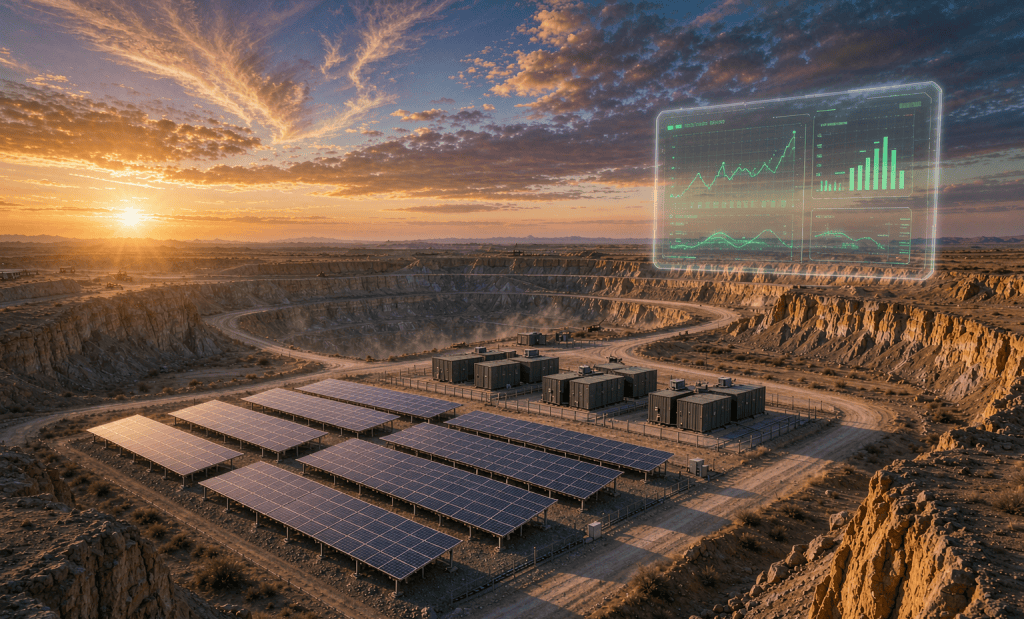
Takeaway: Treat solar plus storage as your primary generation, and diesel as insurance. The sites that win in 2027 are the ones that sized storage to carry the daytime load, not just to shave peaks.
>AI is the multiplier on everything above. A modern EMS can forecast load, solar yield, and fuel burn using weather and historical data, then optimize dispatch in near real time. The payoff is concrete: less wasted fuel, longer equipment life, and lower operating cost.
>Predictive maintenance is the quieter win. By monitoring vibration, temperature, and runtime, an AI layer flags a failing genset or a degrading battery pack before it trips the site offline. In one deployment, an AI-based EMS reduced diesel consumption by 15% purely through smarter scheduling — no new hardware, just better decisions. IoT sensors and live dashboards turn the power plant from a black box into a manageable asset.
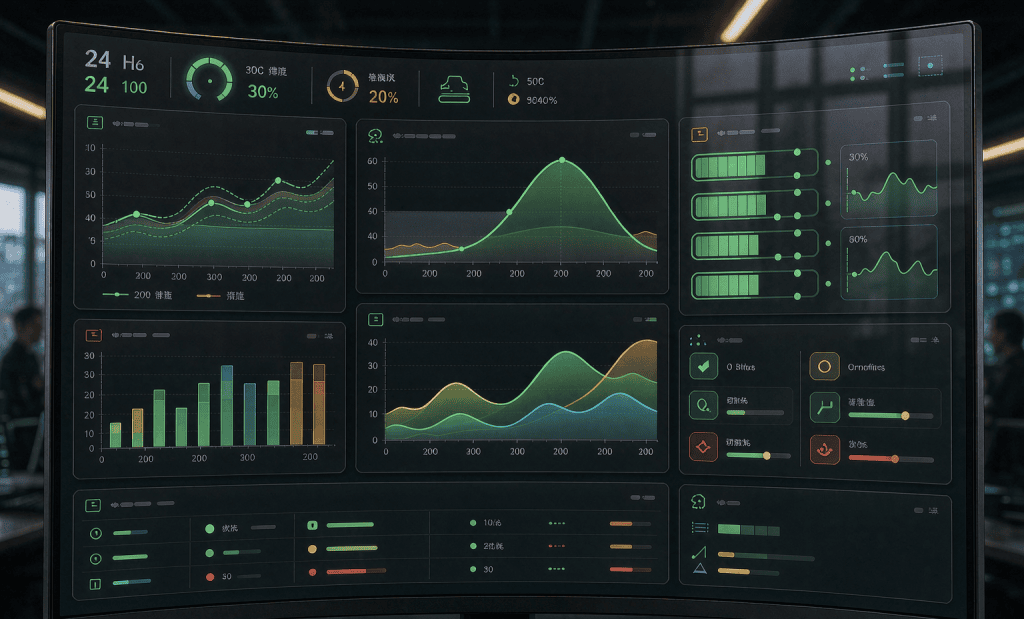
Takeaway: If your EMS can't show you load forecasts and health alerts, it's a timer, not intelligence. The 2027 bar is predictive, not just reactive.
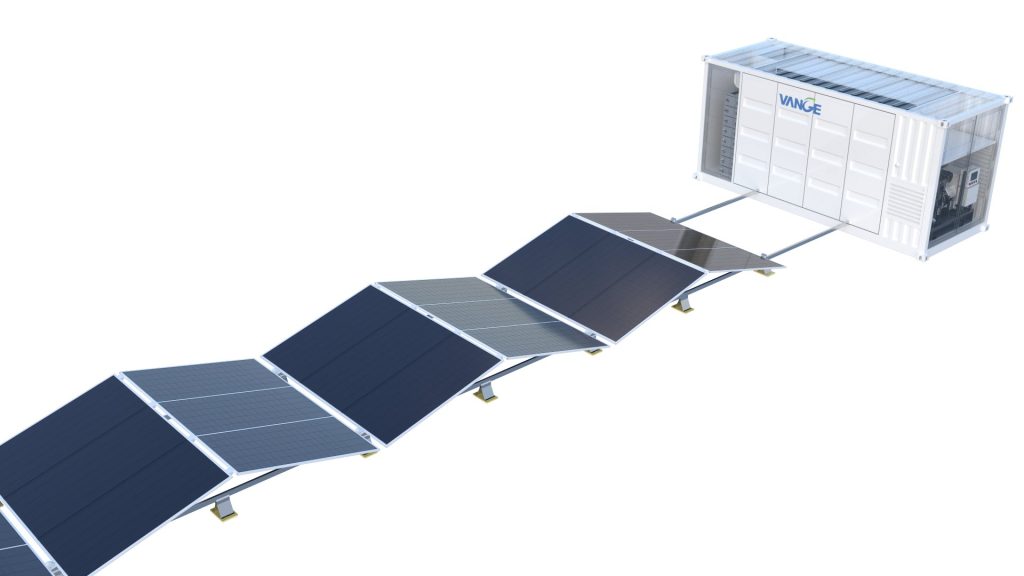
>Remote operations are rarely static. Mines ramp, camps move, construction phases end. That volatility favors modular, containerized power. Containerized solutions ship standard, deploy in hours, and scale by adding units — no poured foundations, no custom engineering for every move.
>Foldable solar containers are especially attractive for temporary sites because they unfold to a large PV area from a single 40ft footprint, then pack away for the next location. “Power-as-a-service” and rental models are also emerging, letting operators avoid capex and pay per kWh delivered. The table below shows why deployment speed matters.
| Deployment model | Typical commissioning | Relocation effort | Best fit |
|---|---|---|---|
| Fixed ground-mount | 4–10 weeks | Very high | Permanent, long-lease sites |
| Containerized PV+BESS | 1–3 days | Low | Movable / temporary sites |
| Foldable solar container | < 1 day | Very low | Rapid-deploy, multi-site |
>For a deeper look at the containerized approach, read Containerized Solar: The Turnkey Power Solution for Remote Construction and Mining Sites.
>The same architecture that powers a mine is now the default for remote communities and industrial clusters. A microgrid integrates renewables, storage, and diesel backup behind an EMS that keeps frequency and voltage stable whether the grid is a kilometer or a continent away.
>In developing regions, microgrids deliver more than electrons — they unlock productive activity: cold storage, water pumping, connectivity, and clinics. We expect a continued rise in microgrid projects across the Middle East and Africa, often backed by development finance and public-private partnerships. The trend toward “energy independence” is as much about resilience as it is about cost.
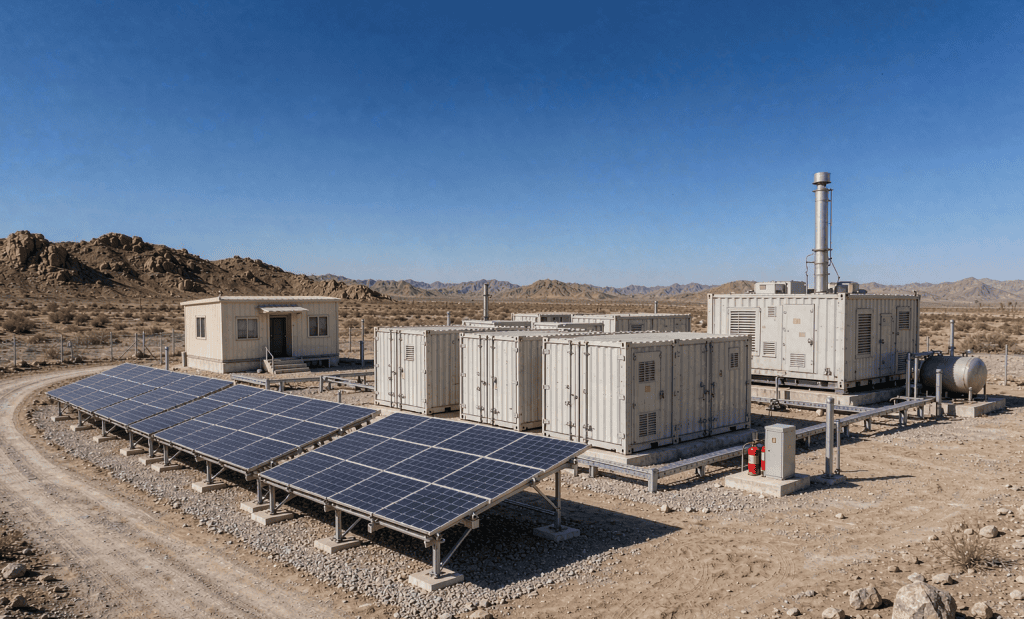
Takeaway: A microgrid is not a generator plus panels. It's a controlled system. The EMS and protection scheme — not the hardware list — determine whether it actually delivers reliable power.
>Diesel will not disappear in 2027, but it will get company. Hydrogen fuel cells and biofuels (such as HVO) are emerging as drop-in or near-drop-in complements that cut the carbon intensity of the backup layer without a full redesign.
>The honest caveat: these are complements, not replacements, for most off-grid sites today. Hydrogen’s delivered cost and refueling logistics are still maturing, while HVO is widely available but pricier than diesel. PORTA’s hybrid systems are deliberately fuel-flexible, so a site can blend in alternative fuels as they become economic.
| Metric | Diesel | Hydrogen (PEMFC) | Biofuel (HVO) |
|---|---|---|---|
| Energy density | High | Medium | High |
| $/kWh delivered | Baseline | 2–4x today | 1.2–1.6x |
| CO2 (well-to-tank) | 100% | Near-zero (green H2) | 60–90% lower |
| Availability off-grid | Universal | Emerging | Growing |
>Lithium-ion — especially LFP — remains the workhorse, but 2027 brings real diversification in storage chemistry. Flow batteries (vanadium, iron) offer very long cycle life and are well suited to 8-hour-plus duration where LFP would need oversized banks. Solid-state is the headline-grabber, promising higher energy density and safety, though volume deployment is more a 2028+ story.
>Second-life EV batteries are also entering stationary storage, lowering capex where daily cycling is moderate. The lesson for operators: match the chemistry to the duty cycle. A site with a flat daily load and night-time diesel offset wants LFP; a site with long multiday gaps between sun or supply wants flow or mechanical storage.
| Technology | Cycle life | Energy density | Best for |
|---|---|---|---|
| Lithium-ion (LFP) | 4,000–8,000 | High | Daily cycling, most sites |
| Flow (vanadium) | 12,000+ | Low | 8h+ long-duration storage |
| Solid-state (emerging) | TBD | Very high | High-value, 2028 and beyond |
>The last of our 2027 off-grid power predictions is that policy, not just technology, will decide adoption speed. Carbon taxes, Scope 1/2 reporting mandates, and emissions caps are pushing remote operators to clean up. International frameworks (Paris Agreement, COP28 outcomes) keep the pressure on, and development banks increasingly tie financing to a credible decarbonization plan.
>In Saudi Arabia and the wider Gulf, Vision 2030 and national renewable targets are reshaping procurement: hybrid and renewable-ready systems win tenders, and ADF-style financing lowers the barrier. Operators who plan for these rules now avoid stranded diesel assets later.
>The throughline of all eight predictions is simple: design hybrid, manage it intelligently, and stay fuel-flexible. The operators who treat 2027 as a planning year — not a wait-and-see year — will lock in lower energy costs and lower emissions before the rules force their hand.
>Ready to model your own system? Use our Free Solar-Diesel-Storage Microgrid Configurator to design a hybrid system for your site in five minutes.
Q: What are the main trends in off-grid power for 2027?
A: The big shifts are hybrid-first design, solar+storage as baseload, AI-driven energy management, modular/mobile solutions, and tightening emissions policy.
Q: How can hybrid systems reduce fuel costs?
A: By letting solar and storage carry the daytime load, hybrids typically cut diesel consumption 30–60% depending on site and design.
Q: What is a mobile BESS?
A: A mobile Battery Energy Storage System is a containerized battery that moves with the site, giving temporary or relocateable storage without fixed civil works.
Q: How does AI optimize off-grid power systems?
A: AI forecasts load and generation, optimizes dispatch, and predicts maintenance — reducing waste and downtime without new hardware.
Q: What role does policy play in adoption?
A: Carbon taxes, emissions reporting, and renewable targets are the strongest accelerants pushing remote operators toward hybrid systems.
Get a customized technical proposal and a capacity-ready quotation. Response within 24 hours.
Email: Jayden@solarstoragediesel.com
WhatsApp: +966 539412006
Riyadh, Saudi Arabia | Nanjing, China
Get a customized technical proposal and pricing for our mobile energy solutions.
Tell us about your requirements and we’ll build a solution.
Ask me anything about solar-storage-diesel hybrid microgrids!