


TECHNICAL GUIDES / ROI & ECONOMICS
Overview: See 7 real hybrid microgrid payback period calculations from Saudi mining, drilling, farming, water, construction, telecom and island sites. Diesel savings, ROI data and a free calculator.
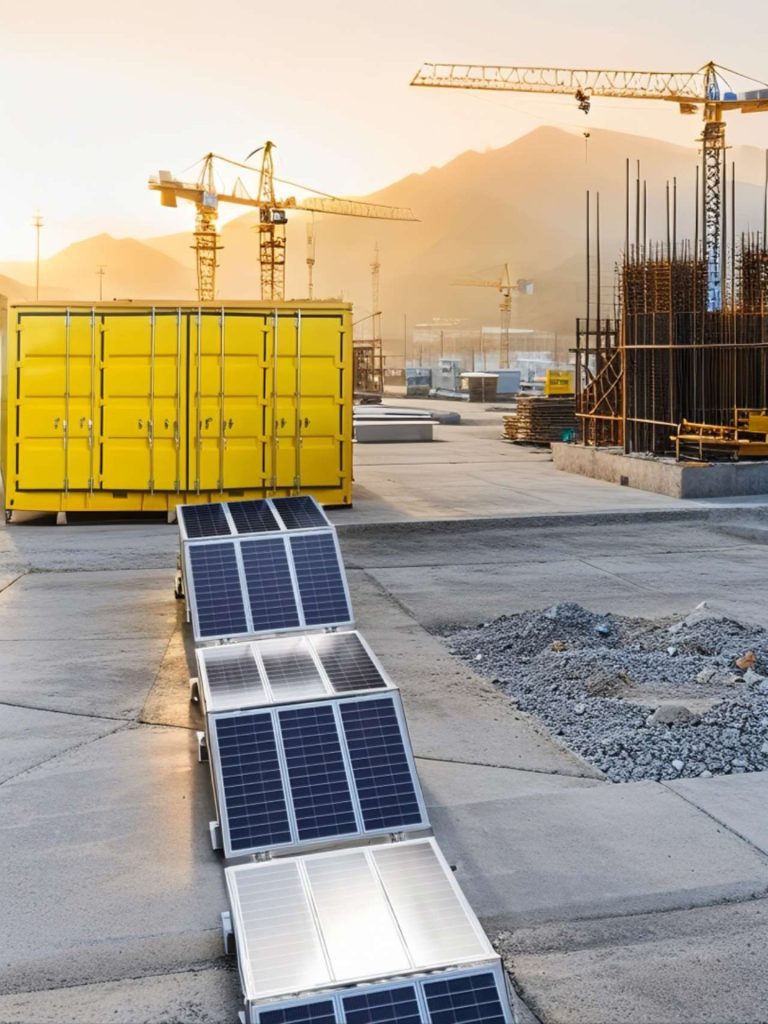
>For off-grid and weak-grid sites across Saudi Arabia, the question is no longer *whether* a hybrid solar-storage-diesel microgrid pays back — it is *how fast*. Diesel fuel is the single largest lifetime cost for a remote site, and every litre displaced by solar and storage drops straight to the bottom line. With Vision 2030 pushing renewable penetration and diesel prices exposed to global volatility, payback period has become the primary filter for procurement teams evaluating hybrid power.
>A hybrid microgrid payback period in Saudi typically lands between 2 and 5 years, depending on load shape, solar resource, diesel price and how the system is financed. The same logic applies whether the site is fully off-grid or sits on a weak distribution feeder in an industrial city where outages already cost production hours. This article walks through the methodology we use at PORTA and then presents 7 real ROI calculations drawn from Saudi mining, drilling, farming, water, construction, telecom and islanded-community projects. All figures are conservative and based on actual PORTA product specifications.
>The payback formula is deliberately simple so that any operator can reproduce it:
Payback (years) = (CAPEX − incentives) ÷ (annual fuel savings + annual O&M savings + annual carbon-credit value)
>We exclude carbon credits in the base case to stay conservative. The inputs that drive the number are diesel price, solar irradiance and the site load profile. Converting a load profile into annual energy is the first step: a 500 kW, 24/7 site consumes about 4.38 GWh per year, while a 150 kW, single-shift site consumes roughly a quarter of that. Because CAPEX scales with peak power and storage hours, not with annual energy, high-duty 24/7 sites amortise their investment fastest — which is exactly why the mining and telecom cases below recover in well under four years.
| Assumption | Value | Note |
|---|---|---|
| Diesel price | SAR 2.5 / L | Approximate delivered cost at remote sites |
| Solar irradiance | 5.5–6.0 kWh/m²/day | High nationwide, lower after dust |
| System derating | 0.80 | Heat, soiling, clipping |
| Genset efficiency | 0.28 L/kWh | Typical diesel generator |
| USD/SAR | 3.75 | Fixed peg |
| Battery degradation | 2–3% / yr | LFP chemistry, augmentation in yr 7–10 |
>PORTA sizes every system against the actual load profile rather than a generic curve, which is why our diesel generator savings calculator and free microgrid configurator produce site-specific numbers instead of averages.
>A 500 kW, 24/7 mining camp is the classic Saudi off-grid load. PORTA deployed a 78 kWp foldable solar container (single-side deployment, 40 wave faces, ~3-hour setup) plus a 1 MWh battery and the existing 500 kVA genset. Solar carries the daytime base, the battery bridges the evening ramp, and the genset runs only as peak backup.
| Parameter | Value |
|---|---|
| Load profile | 500 kW, 24/7 |
| Hybrid system | 78 kWp foldable solar + 1 MWh BESS + 500 kVA genset |
| Diesel saving | 70% |
| CAPEX | SAR 7.2M |
| Annual fuel saving | SAR 2.15M |
| Annual O&M saving | SAR 0.20M |
| Simple payback | 3.1 yr |
>Our broader gold mine off-grid microgrids research shows 60–80% diesel savings across six global sites, placing this 3.1-year payback firmly in range.
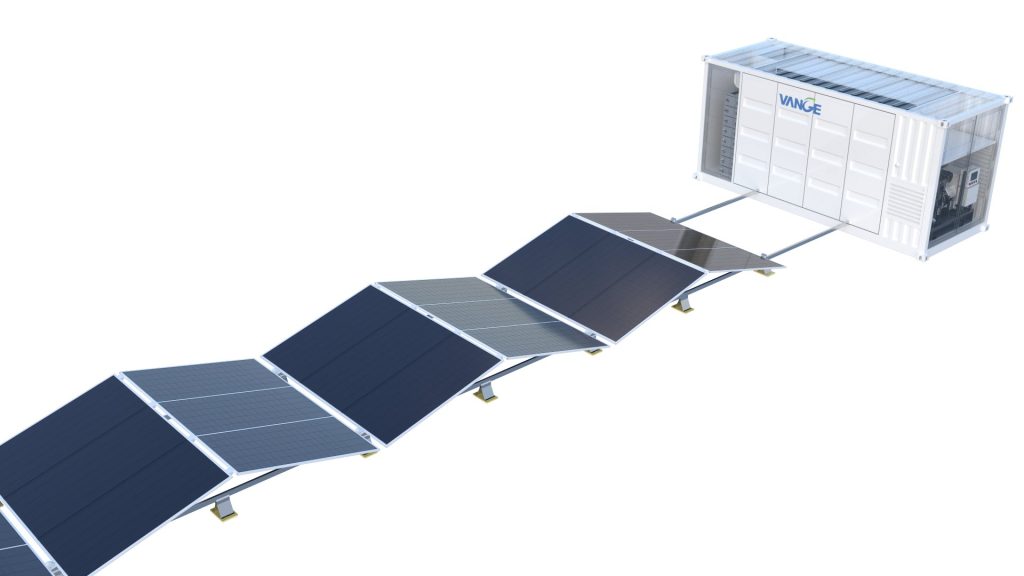
>Drilling rigs have a variable, spiky load that peaks near 1 MW during tripping and falls during circulation. A PORTA Hybrid ALL IN ONE container packages solar, storage and diesel on a single skid, so it can be moved between wells as the campaign progresses. Quick deployment and island-mode reliability are the deciding factors here.
| Parameter | Value |
|---|---|
| Load profile | Variable, 1 MW peak |
| Hybrid system | Hybrid ALL IN ONE (solar + storage + diesel), 1 MW class |
| Diesel saving | 65% |
| CAPEX | SAR 11.5M |
| Annual fuel saving | SAR 2.90M |
| Annual O&M saving | SAR 0.20M |
| Simple payback | 3.7 yr |
>Across our oil-field mobile microgrids case set in Saudi and the UAE, diesel savings of 50–80% are routine, with payback clustering at 3–4 years.
>A 200 kW farm load combines water pumps and cold storage for produce. Solar charges the battery by day; the battery runs the cold room through the night. Because the load runs long hours at high duty, the diesel displacement is large.
| Parameter | Value |
|---|---|
| Load profile | 200 kW, pumps + cold storage |
| Hybrid system | Foldable solar + 0.5 MWh BESS |
| Diesel saving | 72% |
| CAPEX | SAR 3.0M |
| Annual fuel saving | SAR 1.10M |
| Annual O&M saving | SAR 0.15M |
| Simple payback | 2.4 yr |
>At 2.4 years this is the fastest payback in the set, driven by continuous high diesel consumption and a modest CAPEX. Agricultural financing and subsidy programmes can shorten it further.
>A 300 kW desalination and pumping plant runs continuously, making it ideal for a high solar fraction. Reliability matters more than peak shaving, so the design favours battery autonomy over genset runtime.
| Parameter | Value |
|---|---|
| Load profile | 300 kW, continuous |
| Hybrid system | Foldable solar + 1.2 MWh BESS + genset |
| Diesel saving | 60% |
| CAPEX | SAR 5.2M |
| Annual fuel saving | SAR 1.30M |
| Annual O&M saving | SAR 0.15M |
| Simple payback | 3.6 yr |
>With reduced generator runtime comes lower maintenance exposure — a secondary saving beyond the fuel line.
>A 150 kW, 12-month project needs power that arrives fast and leaves with the crew. The mobile foldable container reaches a three-hour deployment on a compacted pad, then redeploys to the next site — so the same asset earns across multiple projects.
| Parameter | Value |
|---|---|
| Load profile | 150 kW, 12-month project |
| Hybrid system | Mobile foldable solar + 0.4 MWh BESS |
| Diesel saving | 50% |
| CAPEX | SAR 2.4M |
| Annual fuel saving | SAR 0.95M |
| Annual O&M saving | SAR 0.15M |
| Payback within project | 10–14 months |
>Because the asset is reusable, the “payback” is better measured per project: the fuel saving alone recovers the mobile unit inside a single 12-month build.
>A 10 kW off-grid tower runs 24/7 with almost no staff on site. A small solar-plus-battery unit with remote monitoring slashes diesel to near zero and removes most truck rolls.
| Parameter | Value |
|---|---|
| Load profile | 10 kW, 24/7 |
| Hybrid system | Small solar + 0.1 MWh BESS |
| Diesel saving | 80% |
| CAPEX | SAR 0.45M |
| Annual fuel saving | SAR 0.17M |
| Annual O&M saving | SAR 0.03M |
| Simple payback | 2.3 yr |
>The low absolute CAPEX and 80% diesel cut make telecom the second-fastest payback, with remote monitoring keeping O&M near zero.
>A 500 kW islanded community grid needs high renewable penetration and large storage for energy security. The bigger battery pushes CAPEX up, stretching payback to the top of the range.
| Parameter | Value |
|---|---|
| Load profile | 500 kW, islanded |
| Hybrid system | Foldable solar + 2.5 MWh BESS + genset |
| Diesel saving | 70% |
| CAPEX | SAR 9.0M |
| Annual fuel saving | SAR 1.80M |
| Annual O&M saving | SAR 0.20M |
| Simple payback | 4.5 yr |
>Carbon reduction and fuel-security value sit alongside the direct saving, which many operators weight heavily for strategic sites.
>Two trends hold across the set. First, CAPEX scales with peak load and storage hours, not with annual energy — so a 10 kW telecom site costs a fraction of a 1 MW drilling rig even though both reach similar diesel-cut percentages. Second, payback tracks diesel consumption more than it tracks CAPEX: the high-duty farm (72% saving, 2.4 yr) and telecom (80% saving, 2.3 yr) recover fastest, while the storage-heavy island community (4.5 yr) sits at the slow end despite an identical 70% saving. For procurement, the lesson is to maximise generator runtime displaced per riyal of battery, then size solar to the daytime load.
>Four levers move the number most:
>The tables above are starting points, not substitutes for a site assessment. PORTA’s free microgrid configurator estimates your payback in minutes from load and fuel data, and our diesel generator savings calculator models fuel cuts before you commit capital.

>For a procurement-grade figure, contact PORTA for a detailed site-specific ROI analysis built on your real load profile, diesel logistics and financing structure.
>What is a typical hybrid microgrid payback period in Saudi Arabia? Depending on load and diesel price, payback usually ranges from 2 to 5 years across the case set above.
>How much diesel can a hybrid microgrid save in Saudi? PORTA case studies show 50–80% diesel savings for mining and oil-field applications, and up to 80% for telecom.
>What factors affect the payback period of a microgrid? Diesel price, solar irradiance, load profile, system CAPEX and financing costs are the dominant variables.
>Does PORTA offer a free ROI calculator? Yes — PORTA provides a free diesel generator savings calculator and a microgrid configurator for site-specific estimates.
Get a customized technical proposal and a capacity-ready quotation. Response within 24 hours.
Email: Jayden@solarstoragediesel.com
WhatsApp: +966 539412006
Riyadh, Saudi Arabia | Nanjing, China
Get a customized technical proposal and pricing for our mobile energy solutions.
Tell us about your requirements and we’ll build a solution.
Ask me anything about solar-storage-diesel hybrid microgrids!