


TECHNICAL GUIDES / EV CHARGING
Overview: How solar-storage-EV charging hubs keep remote mines, bus depots and weak-grid communities moving — with PV + BESS + diesel architecture, a time-of-use charge strategy and proven bus-depot deployments.
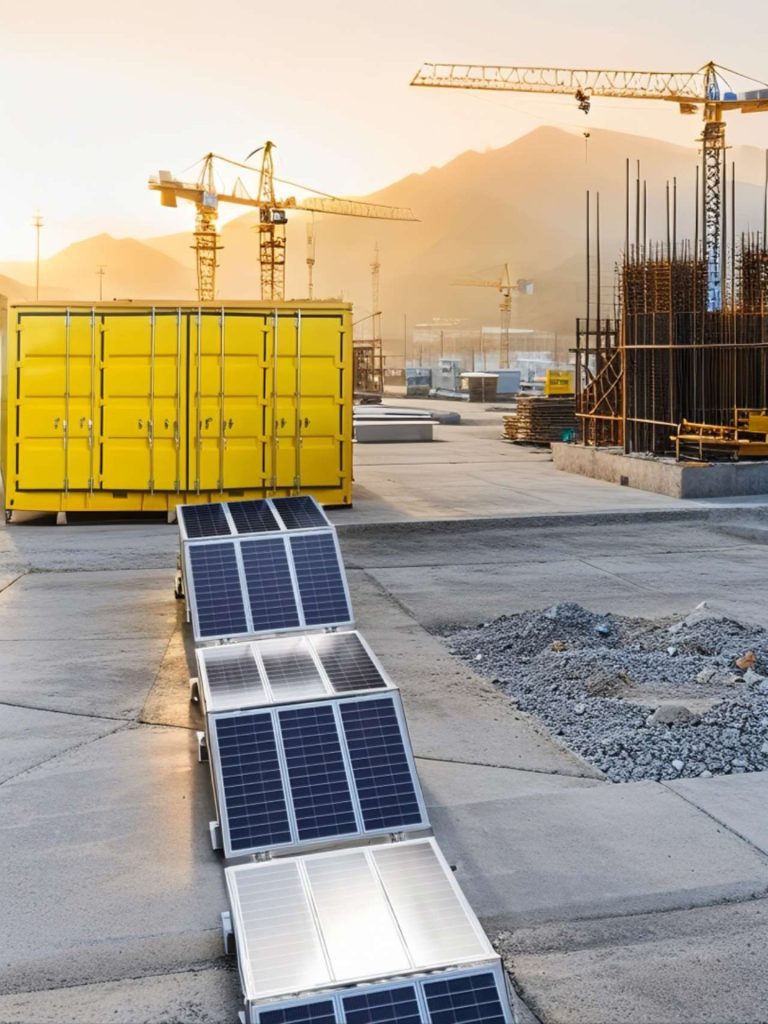
>Electric vehicles are arriving at the edges of the grid faster than the grid itself can support them. A mining camp that buys its first electric haul truck, a bus depot built 40 km from the nearest substation, or a coastal community adding electric ferries all hit the same wall: a single DC fast charger can draw 150–350 kW, and a diesel generator or a weak feeder line simply cannot deliver that cleanly or cheaply.
>A solar-storage-EV charging hub closes that gap. By pairing a PV array and a battery energy storage system (BESS) with the charger, the site draws steady power from solar and storage while the grid or a diesel backup only tops up during extremes. The result is lower fuel burn, predictable charging costs, and the ability to electrify transport where a grid connection would take years or never come at all.
>For operators in Saudi Arabia and the wider Middle East, this is not a future scenario. Remote mines, desalination sites, and logistics yards already run on hybrid solar-diesel power — adding EV charging is the natural next step on the same architecture.
>The core idea is simple: decouple the chaotic, spiky demand of EV charging from the generation and grid supply by buffering it through storage. A well-designed hub has five functional blocks.
>The Solar-Storage-EV Charging Hub Architecture shown below keeps solar and storage as the primary energy source. The smart EMS (energy management system) decides in real time whether to charge the BESS from PV, from the grid during off-peak hours, or to discharge the battery to serve EVs during peak demand. Diesel or grid standby only engages when the battery is depleted and solar is unavailable.
>This modular layout is exactly what a PORTA foldable solar container plus a mobile BESS delivers as a turnkey, movable hub — deploy in hours, relocate when the project moves.
>The single biggest cost lever in any hub is *when* you pull energy. A naive hub charges EVs straight from the grid at peak tariff; a smart hub follows a three-mode daily cycle.
>Time-of-Use Charge Strategy is what separates a hub that saves money from one that merely moves the diesel cost onto a power bill. The pattern repeats every 24 hours:
>The table below shows how the three modes shift both cost and emissions for a typical 20-vehicle depot.
| Mode | Energy source | Cost profile | Best for |
|---|---|---|---|
| Night grid charge | Grid (off-peak) | Lowest $/kWh | Grid-connected weak sites |
| Day solar direct | PV | Near-zero marginal | Sun-rich remote sites |
| Evening peak discharge | BESS | Avoids peak tariff | Cost + emission cut |
A hub without a time-of-use strategy can still cut diesel — but one *with* the strategy typically doubles the payback speed by stacking solar savings on top of peak-tariff avoidance.
>Sizing a charging hub is not guesswork. Start from the vehicles, not from the panels. The load-first method walks through five steps:
>The example below sizes a small remote depot:
| Input | Value |
|---|---|
| EVs (mixed cars + 2 e-buses) | 18 vehicles |
| Peak simultaneous load | 320 kW |
| Daily recharge need | 1,150 kWh |
| Target PV offset | 75% |
| Recommended BESS | ~600 kWh / 400 kW |
>A system like the PORTA Hybrid ALL IN ONE — combining PV, BESS and a diesel extender in one unit — can be spec’d to this profile and delivered as a single containerised block.
>This is not theory. Public solar-storage-EV hubs are already operating at scale, proving the architecture and the economics.
>Real-World Hubs Prove the Model across four very different sites — from a Chinese provincial bus network to a Canadian community club — and every one validates the same lessons: PV plus storage carries the base load, and the hub pays back through fuel and tariff savings.
>These deployments use the same load-first sizing and time-of-use logic described above. The difference for a remote Middle East operator is simply that the “grid standby” becomes a diesel extender — which is exactly what hybrid microgrids in the region already run on.
>Permanent concrete-and-cabinet charging stations make sense in a city. They make no sense at a mine that moves every three years, a disaster-relief staging area, or a seasonal agricultural hub. That is where a foldable, relocatable system wins.
>The product photo below shows the PORTA foldable solar container — the same unit that deploys in under three hours and can be re-tasked from site power to EV charging by swapping the load outlet. Because the PV, BESS and controls travel as one block, there is no civil works, no permitting delays, and no stranded asset when the project ends.
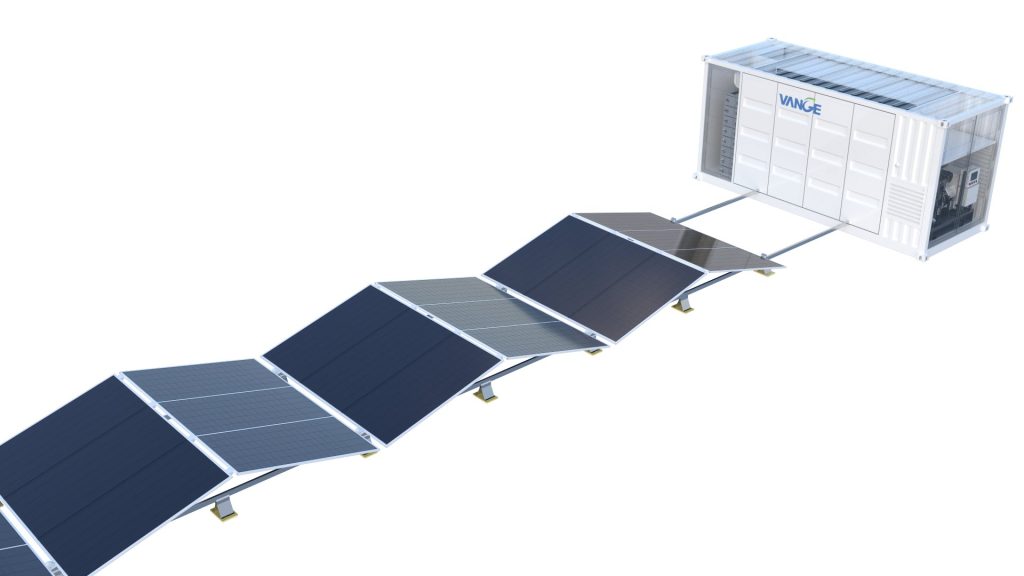
>The image below shows a PORTA foldable photovoltaic container with its array stowed — confirming how compact the system is in transport and how fast it opens on arrival.
>For fixed, higher-volume yards, a mobile BESS paired with a fixed PV canopy delivers the same buffering without relocation needs. Either way, the EMS, safety and monitoring stay identical, so operators train once.
>Most failed charging projects repeat the same avoidable errors. Watch for these:
Use the free microgrid configurator to sanity-check your vehicle load, solar potential and storage duration before requesting a quote — it applies the same load-first method in minutes.
Related Reading
Get a customized technical proposal and a capacity-ready quotation. Response within 24 hours.
Email: Jayden@solarstoragediesel.com
WhatsApp: +966 539412006
Riyadh, Saudi Arabia | Nanjing, China
Get a customized technical proposal and pricing for our mobile energy solutions.
Tell us about your requirements and we’ll build a solution.
Ask me anything about solar-storage-diesel hybrid microgrids!