


TECHNICAL GUIDES / AGRICULTURE
Overview: A free Saudi farm energy audit template for poultry, greenhouse & irrigation: calculate your diesel baseline, qualify for ADF 70% financing, and size a hybrid solar-storage-diesel system.
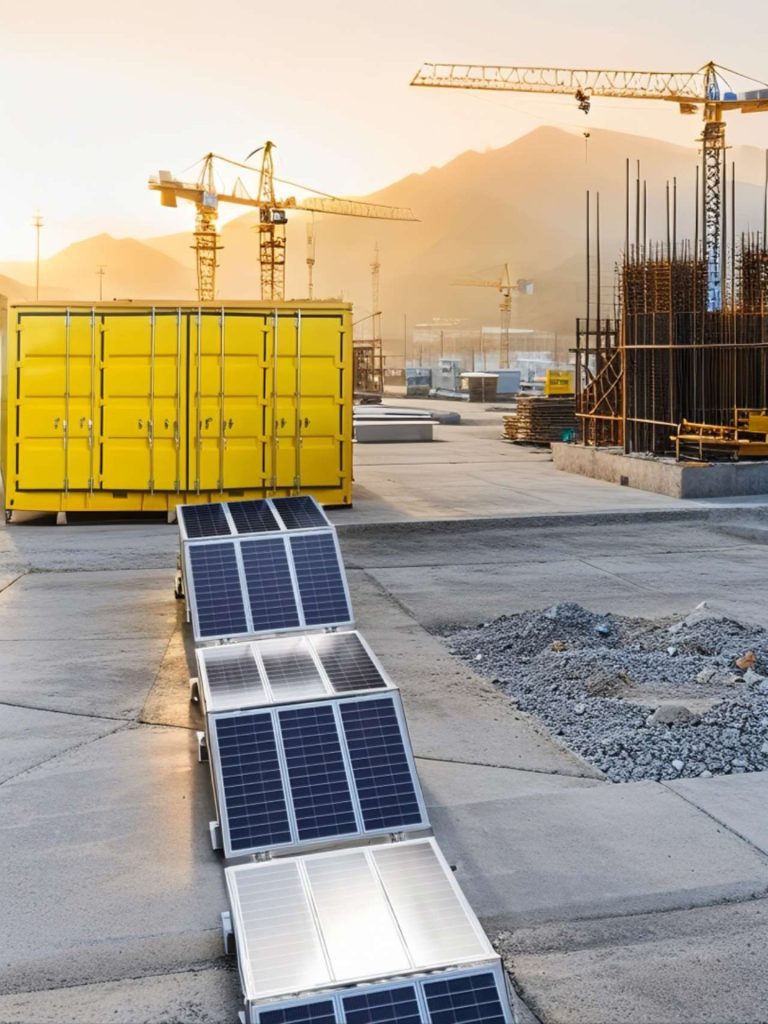
>A practical saudi farm energy audit diesel methodology is the first step any poultry, greenhouse, or irrigation operation should take before investing in solar and storage. Across the Kingdom, farms that sit far from a stable grid — or that keep a diesel generator as the sole source — pay a hidden premium that few balance sheets fully capture. In Saudi Arabia, the challenge is sharpened by summer temperatures that push cooling loads to their limit and by logistics distances that make fuel delivery slow and expensive.
>Diesel generators have been the default answer for decades. But diesel-only power on a farm is quietly inefficient: a generator sized for peak ventilation or irrigation runs most of its life at partial load, where specific fuel consumption is at its worst. That is where an audit changes the conversation.
>The pump price is only the visible line. Around it sit fuel transport, on-site storage tanks, frequent oil changes under high ambient heat, and downtime risk when a delivery slips or a unit faults. On a 12-month season, those hidden costs routinely exceed the generator’s capital price.
>Three sectors bleed the most cash:
>An energy audit identifies the baseline consumption and the quick wins *before* you spend a riyal on hybrid equipment. It is the difference between guessing and engineering.
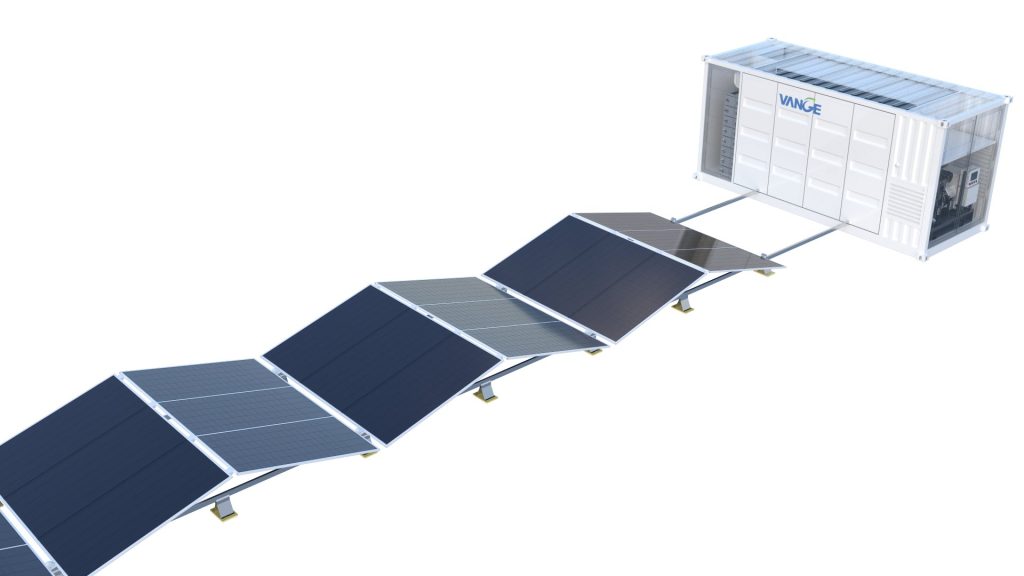
>The fastest way to start is with three sector tables. Each table turns a farm’s real equipment list into a diesel baseline. The product photo below shows the kind of deployable hybrid unit these audits are sized against.
| Item | Qty | Runtime h/day | kW each | Daily kWh | Diesel L/day | Cost/day (SAR) |
|---|---|---|---|---|---|---|
| Tunnel fans | 12 | 18 | 1.1 | 237.6 | — | — |
| Circulation fans | 20 | 20 | 0.25 | 100.0 | — | — |
| Evap. cooling pumps | 4 | 18 | 2.2 | 158.4 | — | — |
| **Subtotal** | — | — | — | **496.0** | ~150 | **~225** |
| Item | Qty | Runtime h/day | kW each | Daily kWh | Diesel L/day | Cost/day (SAR) |
|---|---|---|---|---|---|---|
| Exhaust fans | 8 | 20 | 1.5 | 240.0 | — | — |
| Pad-pump sets | 3 | 20 | 3.0 | 180.0 | — | — |
| Circulation fans | 30 | 22 | 0.18 | 118.8 | — | — |
| **Subtotal** | — | — | — | **538.8** | ~165 | **~248** |
| Item | Value | Note |
|---|---|---|
| Pump rating | 50 HP (~37 kW) | diesel engine |
| Flow rate | 60 m³/h | head 30 m |
| Runtime | 8 h/day | seasonal |
| Diesel L/h | ~11 | at actual load |
| Daily diesel | ~88 L | 8 × 11 |
| Cost/day | ~132 SAR | at 1.5 SAR/L |
>The core formula that links every table: daily diesel litres = generator fuel consumption rate (L/h) × runtime hours. Measure the L/h at the *actual* load, not the nameplate full-load figure — partial-load consumption is almost always higher per kWh. Fill one week of real numbers and you have a defensible baseline.
>For the poultry-specific hybrid case, see how solar hybrid systems cut poultry fuel costs by 40% on Saudi farms. For greenhouse resilience, our piece on hybrid energy as the 2026 lifeline for Saudi greenhouse cooling goes deeper.
>You cannot claim savings you cannot measure. Before adding solar and storage, calculate the diesel baseline your current or planned generator consumes.
>The flow below shows the path from raw fuel measurement to an annual SAR figure.
>Use a fuel flow meter, or the manufacturer’s consumption curve at your real load. Avoid assuming full-load burn — a generator at 30% load can consume 60% more fuel per kWh than at 80%.
>Use hour meters or a 7-day manual log, broken out by poultry / greenhouse / irrigation. Many farms run one generator for everything; splitting the hours reveals which sector dominates.
>Multiply L/h × runtime, then scale to a year. Add maintenance (oil + filters roughly every 500 run-hours) as part of the true baseline. If grid power is available nearby, compare against its tariff — but most remote farms have no grid option at all.
>A worked example for a 20,000-bird house: 150 L/day × 365 ≈ 54,750 L/year. At 1.5 SAR/L that is ~82,100 SAR/year in fuel alone, before maintenance. That single number is what every hybrid proposal should beat.
>An audit often surfaces fixes that cost little but save real fuel. Do these first:
>These trim the baseline so the hybrid system you eventually size is smaller — and pays back faster.
>The audit’s daily kWh drives solar array size; the peak load drives battery and inverter size. The EMS then prioritizes solar during the day, uses the battery for night and peaks, and auto-starts diesel only during extreme deficits.
>For a deployable, scalable starting point, PORTA’s foldable solar container delivers 78 kWp from a single standard unit — single-side deployment with 40 alternating corrugated faces (20 sun-facing, 20 shaded-side), each face holding 3 PV modules tilted 20–25° in opposite directions so both sides generate. Mobile BESS units add storage in 55–723 kWh blocks, and a compact all-in-one hybrid (78 kWp PV + ~128 kWh battery + a 60–75 kVA diesel) covers a meaningful slice of a mid-size farm and cuts diesel from day one.
>Deployment is under 3 hours with no civil works, so the same asset serves the poultry house in summer and the irrigation pivot in another season. The dashboard mock below shows the kind of source mix a hybrid EMS delivers.
>Use the free solar-diesel-storage microgrid Configurator to drop your audit numbers in and get a preliminary design in about five minutes.
>A strong audit does double duty: it sizes the system *and* it qualifies you for funding. The Agricultural Development Fund (ADF) offers up to 70% financing for approved agricultural projects that reduce diesel dependence, including solar, storage, and hybrid systems.
>The flow below shows how an audit baseline moves from application to installation.
>Our dedicated guide on using ADF financing to upgrade your farm’s power walks through the application steps and documentation.
>A baseline-to-hybrid comparison makes the case concrete. The table below is representative, built from the audit in Table 1.
| Line | Value |
|---|---|
| Baseline diesel | 150 L/day @ 1.5 SAR/L = 225 SAR/day ≈ 82,100 SAR/year |
| Hybrid system | 78 kWp solar + 100 kWh BESS + existing diesel |
| Diesel reduction | ~70% |
| Annual saving | ~57,500 SAR |
| System cost | ~400,000 SAR |
| ADF covers (70%) | 280,000 SAR |
| Farmer equity (30%) | 120,000 SAR |
| Payback on equity | ~2.1 years |
>Add sensitivity for diesel price rises and load growth, and the case only strengthens. Farms spending more than 50,000 SAR/year on diesel typically see payback under 3 years once ADF financing is applied.
>The template above is your field-ready starting point. The fastest way to turn an audit into a right-sized hybrid system is the free Configurator: enter your loads and site, and it returns a solar-storage-diesel configuration in about five minutes.
>Try the free solar-diesel-storage microgrid Configurator to design your off-grid farm power, or contact PORTA for a free audit review tailored to your crops and location.
>A farm energy audit measures your diesel and electricity consumption to identify savings. It is the first step to cutting fuel costs and to qualifying for ADF financing — you cannot size a hybrid system or apply for funding without a baseline.
>A properly sized hybrid solar-plus-storage system typically reduces diesel consumption by 60–80%, depending on load profile, battery size, and local solar yield. The audit tables above show how to estimate your own figure.
>Yes. ADF provides up to 70% financing for renewable energy and energy-efficiency projects that reduce diesel dependence, including solar arrays, battery storage, and hybrid controllers.
>It depends on pump HP, flow rate, head, and daily runtime. Use Table 3 to calculate daily kWh, then size solar to cover it — the free Configurator does this automatically from your audit inputs.
>Yes. Table 2 is dedicated to greenhouse cooling loads — exhaust fans, pad-pump sets, and circulation fans — so you can baseline a climate-controlled house the same way you would a poultry or irrigation load.
Get a customized technical proposal and a capacity-ready quotation. Response within 24 hours.
Email: Jayden@solarstoragediesel.com
WhatsApp: +966 539412006
Riyadh, Saudi Arabia | Nanjing, China
Get a customized technical proposal and pricing for our mobile energy solutions.
Tell us about your requirements and we’ll build a solution.
Ask me anything about solar-storage-diesel hybrid microgrids!