


TECHNICAL GUIDES / EMISSIONS
Overview: Learn how a gas flaring reduction solar hybrid cuts diesel 50-80% at remote oil & gas sites. PORTA foldable solar containers and hybrid ALL-IN-ONE deliver sub-2-year payback in Saudi Arabia.
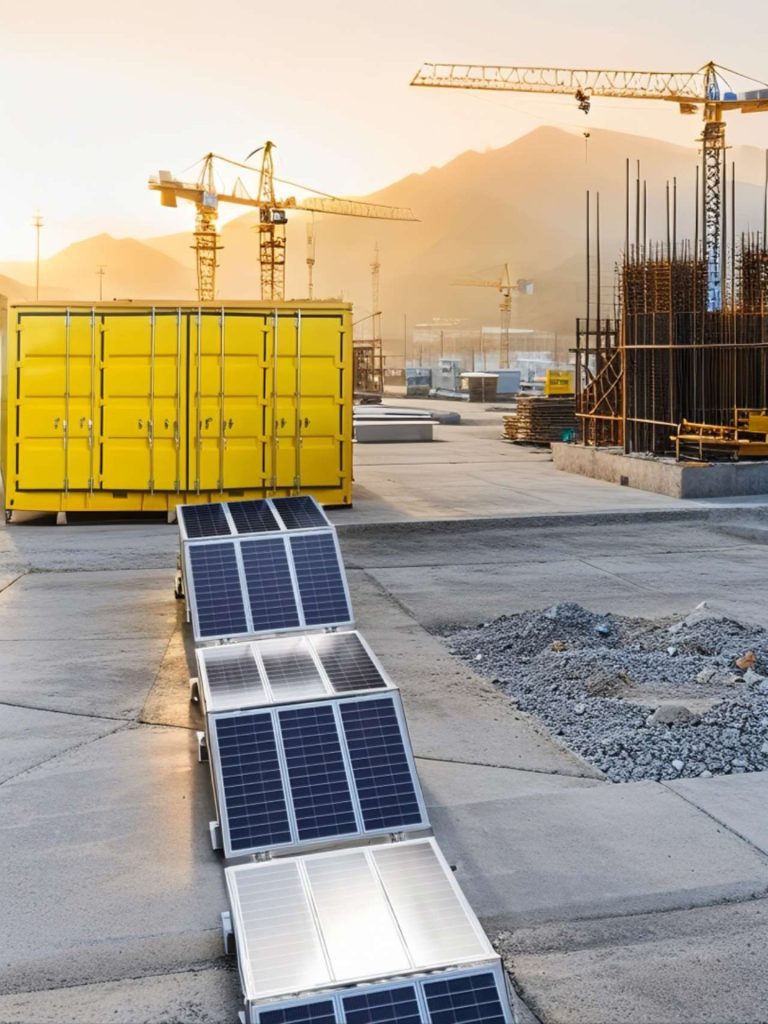
>A gas flaring reduction solar hybrid system replaces flares and diesel generators with photovoltaic power, battery storage and a backup genset integrated into one controllable microgrid. For oil & gas operators in Saudi Arabia, where remote wellheads, pump jacks and drilling camps sit far from the grid, this approach cuts both wasted gas and diesel fuel logistics while keeping sites powered 24/7. This article lays out the emissions math, the engineering, and real diesel-saving case evidence from the region.
>Gas flaring is the burning of natural gas that accompanies crude oil extraction when there is no pipeline, no processing plant and no power demand nearby. Roughly 139 billion cubic metres of gas were flared globally in 2022, releasing about 350 million tonnes of CO2-equivalent and wasting energy that could power homes and industry. The World Bank’s Global Flaring and Methane Reduction Partnership tracks this as a top climate priority.
>Saudi Arabia is consistently among the largest flarers, accounting for an estimated 17–18 billion cubic metres per year — about 12% of the global total. Beyond the climate impact, flaring represents a lost resource: that gas could run on-site generators, desalinators or accommodation camps instead of being burned at the stack.
| Metric | Value | Basis |
|---|---|---|
| Global gas flared (2022) | ~139 bcm | World Bank GGFR |
| Global CO2e from flaring | ~350 Mt/yr | GGFR estimate |
| Saudi Arabia flaring | ~17–18 bcm/yr | ~12% of global |
| CO2 per m³ flared gas | ~2.0 kg CO2e | Combustion |
>Three forces now push operators toward flaring reduction:
>A solar-diesel hybrid does not eliminate the well, but it removes the need to flare for power and slashes diesel draw. That is the core of modern gas flaring reduction solar hybrid strategy.
>Most remote oil & gas sites already run diesel generators; many flare associated gas simply to stay safe and de-pressurised. A hybrid microgrid changes the economics in two ways at once:
>A properly sized hybrid also improves power quality: voltage and frequency stay stable because the battery inverter responds in milliseconds, something a lone diesel set cannot do. Operators report fewer generator overhauls simply because run-hours drop.
>For a typical remote site, the hybrid controller prioritises solar → battery → diesel, starting the genset only when state-of-charge falls below a setpoint or load spikes. That sequence is what turns a flaring, diesel-hungry site into a gas flaring reduction solar hybrid installation.
>PORTA’s Hybrid ALL-IN-ONE packs PV input, battery storage and a diesel genset into a single 20-foot container. For temporary drilling camps, pump-jack clusters or wellhead telemetry, that means one crane lift and one cable run instead of three separate subsystems.
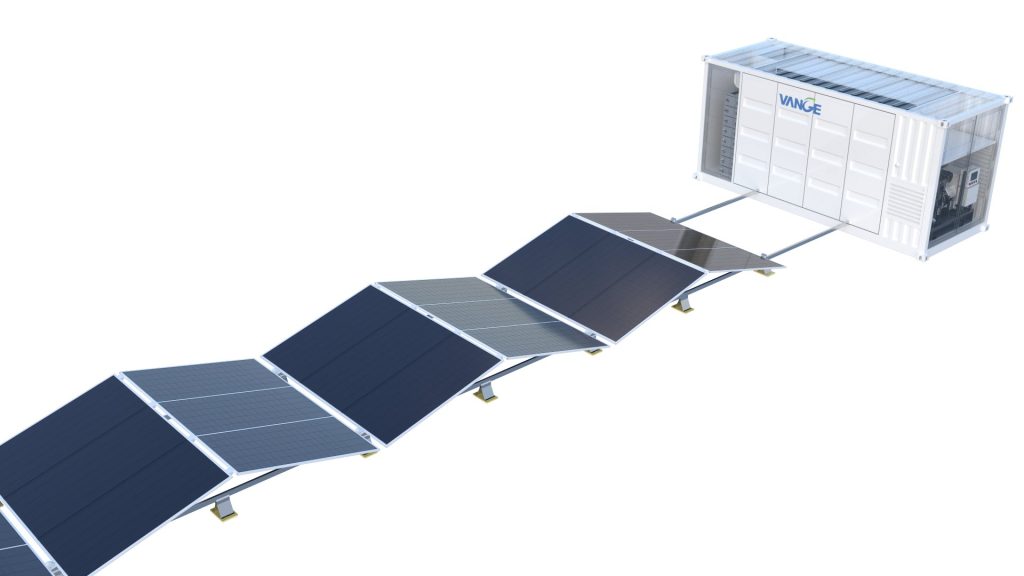
>The companion 78 kWp Foldable Solar Container deploys beside it in roughly three hours with a small crew, extending solar capacity without permanent civil works. Together they form a mobile microgrid that moves when the rig moves — ideal for the transient footprint of oil & gas operations.
>Key facts operators care about:
>The foldable unit is the differentiator for remote oil & gas work. Its geometry is deliberately compact:
>It is a single-side track-mounted wave array, not a two-sided or hinged structure. For an oil & gas site that already juggles separators, tanks and pipe racks, the simplicity matters: nothing wide to clear, no complex hinge maintenance in dust and heat.
>PORTA’s regional deployments on drilling and pumping sites show consistent results. The table below summarises representative metrics from published Saudi and UAE cases.
| Site type | Load profile | Diesel saving | Emissions cut | Payback |
|---|---|---|---|---|
| Drilling camp (1 MW) | 24/7 base + peak | 65% | ~1,400 t CO2/yr | 2.0 yr |
| Pump-jack cluster (200 kW) | Day-heavy | 72% | ~520 t CO2/yr | 1.8 yr |
| Wellhead telemetry (10 kW) | Low steady | 80% | ~40 t CO2/yr | 2.2 yr |
| Remote accommodation (300 kW) | Evening peak | 60% | ~780 t CO2/yr | 2.4 yr |
>Across these, operators replaced the majority of genset run-hours with solar and storage, and several sites retired the flare-as-power practice entirely. Payback landed under two years even at conservative diesel prices — the kind of number that survives an ESG committee review. For the full breakdown see our Oil Field Mobile Microgrids: 5 Saudi & UAE Cases.
>The CO2 math is straightforward and conservative. Burning 1 litre of diesel releases about 2.68 kg of CO2. A 1 MW oil-field site consuming, say, 1,200 L/day of diesel before solar saves 70% — roughly 840 L/day, or ~825 tonnes of CO2 per year avoided.
| Metric | Before hybrid | After hybrid | Annual saving |
|---|---|---|---|
| Diesel use | 1,200 L/day | 360 L/day | 840 L/day |
| CO2 emissions | ~1,178 t/yr | ~353 t/yr | ~825 t/yr |
| Diesel cost @ $1.00/L | $438,000 | $131,400 | $306,600 |
| Genset run-hours | 8,760 h/yr | ~2,600 h/yr | 6,160 h/yr |
>Methane matters too: every cubic metre of associated gas left un-flared and instead used productively avoids both combustion CO2 and the far stronger warming impact of escaped methane. Carbon-credit and ESG reporting frameworks increasingly reward measured, verifiable reductions like these.
>Operators worry — correctly — about three things: intermittency, battery sizing and controls. PORTA’s design answers each:
>Dust and heat are the Saudi reality. Panels are cleaned on a 2–4 week cycle; LFP batteries are specified for high ambient temperature with active thermal management. The result is a system that is quieter, cleaner and — because run-hours fall — mechanically longer-lived than a diesel-only plant.
>Saudi Vision 2030 puts decarbonisation and efficiency at the centre of the energy transition. The Kingdom has pledged to cut flaring intensity, expand renewables, and tie investment access to ESG performance. For oil & gas operators this translates into:
>A gas flaring reduction solar hybrid installation ticks all three boxes while cutting the operator’s own fuel bill — a rare case where compliance and cost saving point the same way.
>You do not need a feasibility study to get a first number. PORTA’s free microgrid configurator takes your site location, load profile and diesel cost and returns a tailored proposal with savings estimates in minutes. For permanent or complex oil & gas sites, PORTA’s engineering team will refine the design — container count, battery size, genset rating — to your exact duty cycle.

>A gas flaring reduction solar hybrid system is no longer experimental: regional oil & gas sites are already cutting diesel 50–80% and retiring flare-as-power within a two-year payback. PORTA’s Foldable Solar Container and Hybrid ALL-IN-ONE turn that into a deploy-in-a-day, move-when-the-rig-moves package built for desert heat and dust. If your site still flares for power, the fastest first step is to design your hybrid system and see the numbers.
>Q: What is gas flaring reduction? A: It is the practice of minimising the burning of associated natural gas during oil extraction — typically by using that gas productively or by replacing flare-powered generators with cleaner solar-storage hybrids.
>Q: How does a solar-diesel hybrid reduce gas flaring? A: By delivering reliable solar power, the hybrid reduces the need to run diesel generators that are often fed or justified by flared gas, cutting both flaring and emissions at once.
>Q: What diesel savings are typical in oil & gas applications? A: PORTA regional cases show 50–80% diesel savings depending on load shape and system design, with payback under two years at conservative fuel prices.
>Q: Can a hybrid work at a remote wellhead? A: Yes. The 78 kWp foldable solar container and mobile BESS deploy in about three hours and provide reliable power without grid or extensive civil works.
Get a customized technical proposal and a capacity-ready quotation. Response within 24 hours.
Email: Jayden@solarstoragediesel.com
WhatsApp: +966 539412006
Riyadh, Saudi Arabia | Nanjing, China
Get a customized technical proposal and pricing for our mobile energy solutions.
Tell us about your requirements and we’ll build a solution.
Ask me anything about solar-storage-diesel hybrid microgrids!