


TECHNICAL GUIDES / ENERGY STORAGE
Overview: Compare sodium-ion vs Li-ion for off-grid microgrids: cost, temperature, cycle life, safety and supply chain. A 2026 engineering guide for hot, remote Saudi sites.
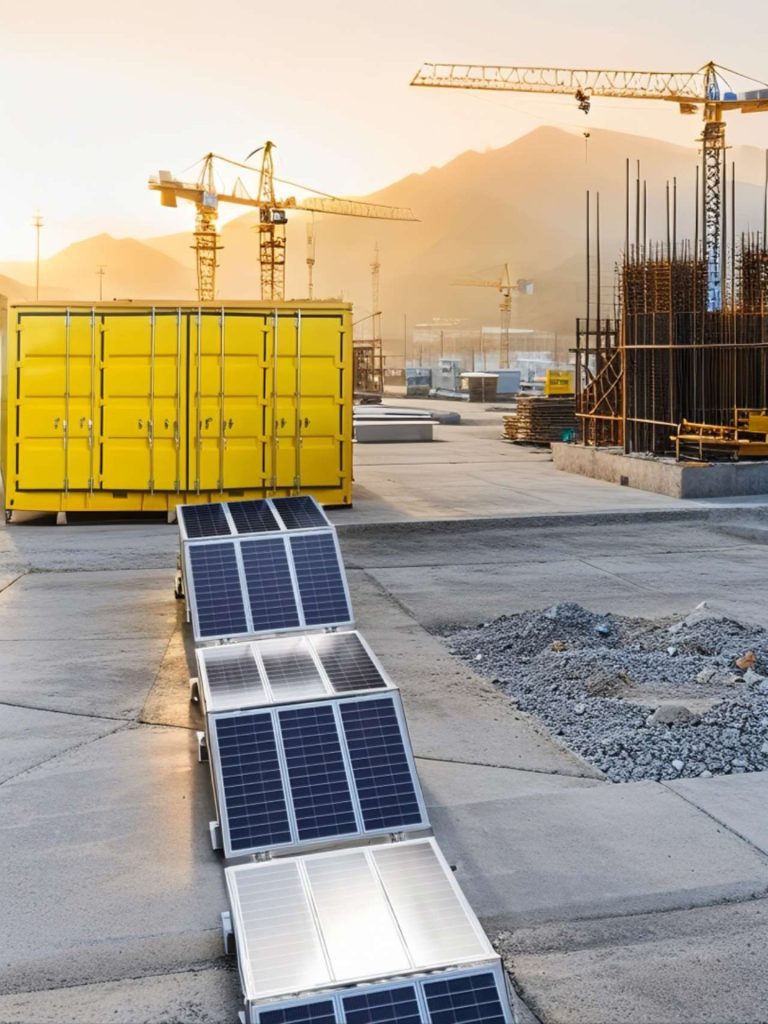
>For years, every off-grid microgrid battery was lithium-ion. In 2026 that assumption is being tested. A sodium-ion battery off-grid microgrid deployment is no longer a lab curiosity: several gigawatt-hour-scale plants are in operation, and the chemistry’s tolerance of heat and its freedom from lithium and cobalt make it a serious candidate for harsh, remote sites. This guide compares sodium-ion against lithium-ion across five engineering dimensions — cost, temperature, cycle life, safety and supply chain — and gives a practical decision framework for Saudi and Gulf industrial projects.
>The two chemistries are not yet interchangeable, but for stationary storage the gap has closed faster than most spec sheets admit. The table below summarises where each leads.
| Dimension | Sodium-Ion | Li-Ion (LFP) |
|---|---|---|
| Raw material cost | Low — sodium, iron, manganese are abundant | Higher — lithium and (for NMC) cobalt exposure |
| Temperature window | Operates to ~60 °C with less fade | Rated to ~45 °C; needs active cooling above that |
| Cycle life | 2,000–5,000 cycles, improving | 4,000–8,000 cycles, mature |
| Thermal runaway risk | Low — more stable, less flammable | Managed but well documented |
| Supply chain | Globally distributed, no cobalt | Concentrated in few regions |
>Sodium wins on material cost and heat behaviour. Lithium still leads on cycle life and track record. For a remote Saudi site where ambient temperature, not cycle count, is the limiting factor, the balance shifts toward sodium sooner than the headline cycle numbers suggest.
>Capital cost is only the first line. For any sodium-ion battery off-grid microgrid evaluation, cooling and replacement dominate the ten-year picture for a 1 MWh stationary bank running in a desert climate. The illustrative comparison below uses 2026 pricing and a site that sees 45–55 °C for much of the year.
| 10-year item (1 MWh, desert) | Sodium-Ion | Li-Ion (LFP) |
|---|---|---|
| CAPEX ($/kWh installed) | $110 | $130 |
| Cooling OPEX, 10 yr | $20,000 | $55,000 |
| Battery replacement / augmentation | $90,000 | $40,000 |
| **Approx. 10-yr TCO** | **$1.20M** | **$1.33M** |
>Sodium-ion’s lower capital and dramatically lower cooling bill offset its shorter cycle life, producing a ten-year total that edges out lithium in hot climates. In a temperate site the result inverts, which is exactly why climate belongs in the decision, not the footnote.
>Battery chemistry slows and ages faster above its comfort zone, and the Arabian Peninsula spends months above 45 °C at the cell surface. Lithium-ion needs active cooling — fans, HVAC, and the energy to run them — to stay inside its 0–45 °C window. Sodium-ion tolerates higher temperatures with less capacity loss, so a desert bank can often run with passive or reduced cooling.
>That difference is not just a comfort issue: every watt spent cooling is a watt not delivered to the load, and every hour of compressor runtime is a maintenance event. PORTA’s mobile BESS can be configured with either chemistry, but for stationary desert deployments the cooling saving alone can justify a sodium-ion specification.
>Cycle life is quoted at standard test conditions, not at 50 °C and 80% depth of discharge. In real Gulf service, lithium’s 4,000–8,000-cycle headline compresses; sodium’s 2,000–5,000 compresses less because heat is its friend rather than its enemy. Microgrid control strategy matters as much as chemistry: holding partial state of charge, limiting depth of discharge on the hottest days, and balancing cells all extend life for both types.
>PORTA’s EMS is chemistry-agnostic and tunes charge limits to the installed battery, so lifespan is protected regardless of which cell is inside the container.
>Thermal runaway — the self-heating cascade that can lead to a lithium cell fire — is the safety concern every operator knows. Sodium-ion’s chemistry is intrinsically more stable, with a much lower propensity to runaway and a less flammable electrolyte. That does not remove the need for containment, but it lowers the residual risk.
>Both technologies ship to UL and IEC stationary-storage standards, and PORTA containers include fire suppression and thermal management whatever the cell chemistry. The point is that sodium-ion starts from a safer baseline, which matters most at unattended remote sites.
>Lithium and cobalt supplies are geographically concentrated, and price swings have bitten storage buyers repeatedly. Sodium draws on salt — abundant and produced on every continent, including the Middle East. For large-scale or strategically sensitive projects, specifying sodium-ion is a way to remove a geopolitical variable from the bill of materials.
>PORTA tracks cell availability closely and will offer sodium-ion wherever it meets our performance and warranty bar, so clients are not locked to a single chemistry.
>Sodium-ion is already a sound choice for stationary, moderate-cycling applications: backup banks, remote community storage, and sites where heat — not daily deep cycling — dominates. It is less compelling where thousands of deep cycles per year are required, or where existing infrastructure is already lithium-based.
>For Saudi mining, construction and telecom sites, the pattern is consistent: if the battery sits warm and cycles gently, sodium-ion is worth specifying today; if it is hammered with daily deep discharge, lithium still wins. PORTA can integrate sodium-ion into its mobile BESS and Hybrid ALL-IN ONE solutions as the technology matures.
>PORTA’s turnkey microgrids are built technology-agnostic. The Foldable Solar Container (78 kWp, single-side deployment) provides the generation; the Mobile BESS and Hybrid ALL-IN ONE provide storage and dispatch. Whether the cells inside are lithium or sodium is a configuration choice driven by site temperature, cycling and budget — not a redesign.
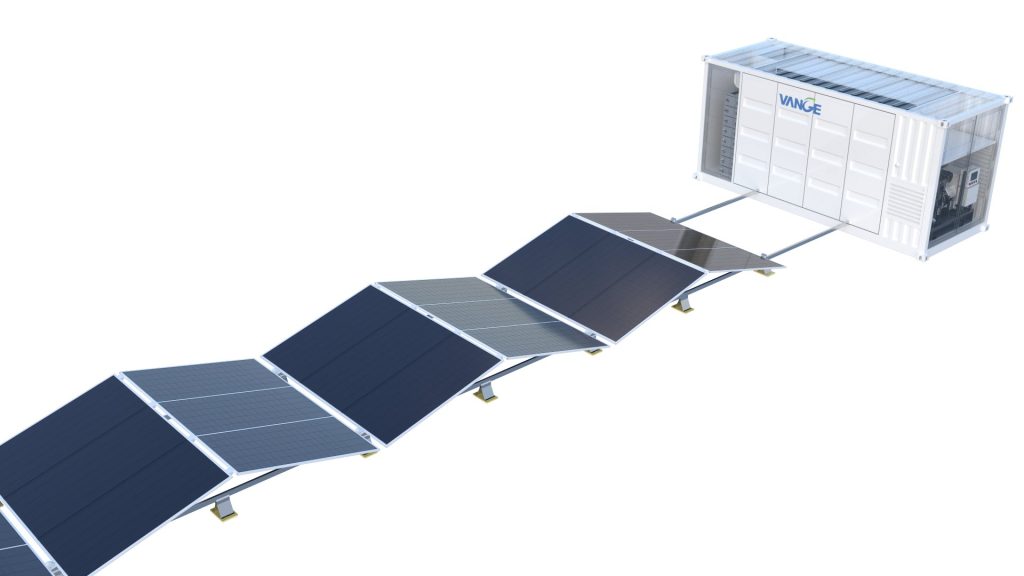
>Our engineering value is in thermal management and EMS optimisation: sizing cooling to the real climate, and shaping charge to protect the cells. That is what keeps a battery bank healthy through a decade of Gulf summers, whichever chemistry it holds.
>Use this matrix to shortlist a chemistry before the detailed design:
| If your project… | Choose |
|---|---|
| Runs above 45 °C ambient for most of the year | Sodium-Ion (less cooling) |
| Needs >6,000 deep cycles / heavy daily cycling | Li-Ion (LFP) |
| Is cost-sensitive with moderate, stationary cycling | Sodium-Ion |
| Operates below 0 °C in winter | Li-Ion (better low-temp) |
| Wants to avoid cobalt / lithium supply risk | Sodium-Ion |
>The honest answer for most 2026 off-grid projects is still “it depends,” but the dependency is now site-specific rather than technology-specific. When in doubt, run both options through a ten-year model rather than comparing nameplate prices.
>Investment and pilot volume are rising, manufacturing cost is falling, and cycle-life figures improve with every product generation. Within three to five years sodium-ion is likely to be a default option for hot-climate stationary storage rather than an alternative. PORTA is actively monitoring and benchmarking cells so we can offer sodium-ion the moment it clears our performance and warranty threshold.
>Sodium-ion will not replace lithium-ion across the board in 2026, but for a hot, remote, moderate-cycling sodium-ion battery off-grid microgrid it is already competitive on total cost and safer by design. The right choice is a function of temperature, cycling, budget and supply-chain priority — not a blanket rule. Use PORTA’s free microgrid configurator for a preliminary design, or contact PORTA for a tailored battery recommendation.
>Are sodium-ion batteries ready for off-grid microgrids? Yes, for hot-climate, cost-sensitive, moderate-cycling stationary sites. Lithium-ion still leads on cycle life and maturity.
>How does sodium-ion cost compare to lithium-ion? Raw-material cost is lower, but manufacturing scale is still ramping, so current prices are comparable; over time sodium-ion is expected to be cheaper, especially where cooling is reduced.
>Can sodium-ion handle high temperatures? Generally yes — it tolerates a wider operating window and degrades less at high temperature than lithium-ion, which needs active cooling above ~45 °C.
>What is the cycle life of a sodium-ion battery? Typically 2,000–5,000 cycles depending on depth of discharge and temperature — lower than lithium-ion today but improving each generation.
>Is sodium-ion safe? It is considered safer than lithium-ion due to a lower risk of thermal runaway and a more stable, less flammable chemistry.
Get a customized technical proposal and a capacity-ready quotation. Response within 24 hours.
Email: Jayden@solarstoragediesel.com
WhatsApp: +966 539412006
Riyadh, Saudi Arabia | Nanjing, China
Get a customized technical proposal and pricing for our mobile energy solutions.
Tell us about your requirements and we’ll build a solution.
Ask me anything about solar-storage-diesel hybrid microgrids!