


30-Second Summary: Thousands of telecom towers in Saudi Arabia still run on diesel 24/7. A PV + BESS + DG all-in-one microgrid can cut fuel consumption by 60–80%, eliminate most refueling trips, and deploy in hours—not months.
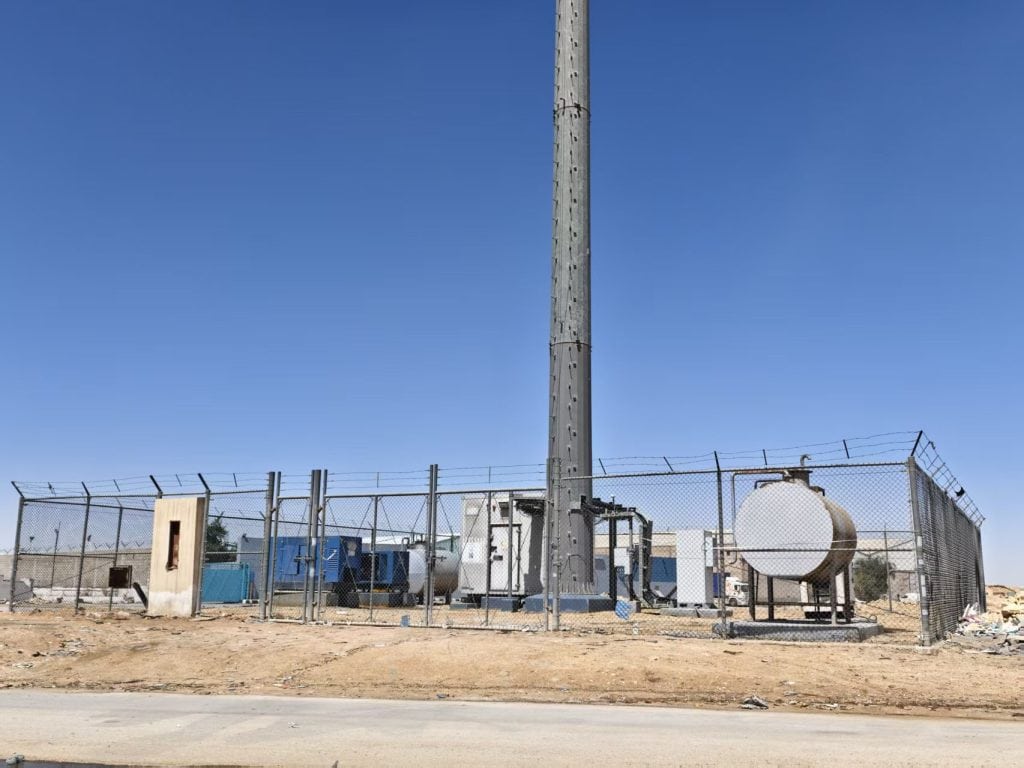
Saudi Arabia’s telecom networks keep expanding—5G rollouts, rural coverage, and industrial IoT all depend on one thing: power at the tower. Yet drive through Riyadh’s outskirts, the Eastern Province, or the desert corridors connecting the Kingdom’s cities, and you’ll still see thousands of cell towers running almost entirely on diesel generators.
It’s a familiar scene: a locked compound, a tall mast, a genset humming 24/7, and a fuel tank waiting to be refilled. For tower owners and mobile network operators (MNOs), this setup is not just old—it’s expensive, logistically painful, and increasingly out of step with Saudi Arabia’s sustainability goals.
There is a better way. A PV + BESS + DG all-in-one microgrid container can replace the diesel-first model with a solar-first, diesel-backup architecture—cutting fuel consumption by 60–80%, eliminating most refueling trips, and turning a telecom tower into a self-sufficient power node that can be deployed in hours.
Diesel has been the default off-grid power source for telecom towers for decades, but ‘default’ does not mean ‘cheap.’ The true cost is layered:
Saudi Arabia has one of the highest solar irradiance levels in the world. Most regions receive 2,000 to 2,500 kWh/m² per year of global horizontal irradiance. For telecom towers, which have relatively stable daytime loads, this is ideal.
Solar power at a tower site is not theoretical. With today’s high-efficiency monocrystalline modules and MPPT charge controllers, a foldable PV container can generate enough energy to carry telecom equipment through most daylight hours and charge a battery bank for the night.
The economics are equally attractive. Solar generation, once the system is installed, has a marginal cost close to zero. Diesel generation has a marginal cost equal to the price of every liter burned. The more solar you can integrate, the more you displace the most expensive electrons on your balance sheet.
An all-in-one mobile microgrid station is a standardized shipping container that integrates three power sources in one plug-and-play unit:
Inside the container, you also get the power electronics: inverters, MPPT controllers, ATS/STS transfer switches, and the EMS (Energy Management System)—the brain that decides, second by second, whether the load should run on solar, battery, or diesel.
The operating logic is simple and automatic:
Because the diesel generator runs far less often and only at optimal load, fuel consumption drops dramatically and maintenance intervals extend.
Let’s look at a realistic example for a typical telecom tower in Saudi Arabia.
Annual fuel savings: $12,000–$15,000 per tower.
For a portfolio of 100 towers, that is $1.2–$1.5 million per year in fuel savings alone, before counting reduced maintenance, fewer refueling trips, and longer generator life.
Payback periods vary by site, but in the Saudi context—high irradiance, high diesel logistics cost, and stable tower loads—operators typically see 2.5 to 4 years for a full system payback. Over a 10-year lifecycle, the savings are substantial.
Fuel savings get attention, but the operational benefits are just as important for telecom operators.
One of the biggest advantages of the all-in-one container approach is speed.
A traditional solar installation at a telecom tower requires civil works, foundations, racking, individual panel mounting, DC cabling, AC wiring, battery room construction, and generator integration. The process can take weeks or months, especially in remote locations with limited labor.
A mobile all-in-one microgrid arrives as a single container. The unit is placed on a flat, stable surface. The foldable solar array is extended. Output cables are connected to the tower distribution panel. The system is commissioned and tested.
Typical deployment time: 2 to 6 hours. No concrete. No heavy construction crew. No long project timeline.
For telecom operators managing hundreds of sites, this means a hybrid energy rollout can be executed tower by tower without disrupting network operations.
Not every tower site is identical, but most off-grid or weak-grid telecom sites in Saudi Arabia are good candidates if they meet a few basic conditions:
The most important step before any hardware decision is a load and solar assessment. This includes analyzing the tower’s 24-hour load curve, evaluating local solar irradiance, and sizing the battery for the required autonomy hours.
Getting the sizing right matters. Oversizing is wasteful. Undersizing defeats the purpose. A proper microgrid design balances capital cost, fuel savings, and uptime risk.
Saudi Arabia’s telecom towers do not have to keep burning diesel 24/7. With world-class solar resources and mature containerized microgrid technology, the business case for switching to PV + BESS + DG is strong.
The all-in-one approach removes the complexity that has historically slowed solar adoption in telecom. One container. One integration. One energy management system. Faster deployment, lower fuel bills, and a clear path toward more sustainable network operations.
If you are responsible for tower energy opex in Saudi Arabia, the question is no longer whether solar-hybrid power makes sense. It is how quickly you can start capturing the savings.
Ready to cut your tower fuel costs? Share your tower load profile and site location, and our team will design a custom PV + BESS + DG microgrid solution sized for your specific needs.
Tell us your load profile. We will size the right PV + BESS + DG microgrid and return a detailed savings estimate within 48 hours.
Request Your Free AssessmentGet a customized technical proposal and pricing for our mobile energy solutions.
Tell us about your requirements and we’ll build a solution.